Urgent care near me
 Key points
- Wounds that are deep, gaping, over a joint, on the face, or bleeding past 15 minutes typically need professional closure.
- Clinicians may use stitches, skin glue, or steri-strips depending on wound size, location, tension, and contamination.
- Most wounds can be sutured up to 6 to 8 hours after injury; facial wounds may be closed up to 24 hours later.
- Animal and human bites require evaluation regardless of size due to high infection risk.
- Urgent care can handle most lacerations same-day; go to the ER only if the wound involves bone, tendon, or uncontrolled bleeding.
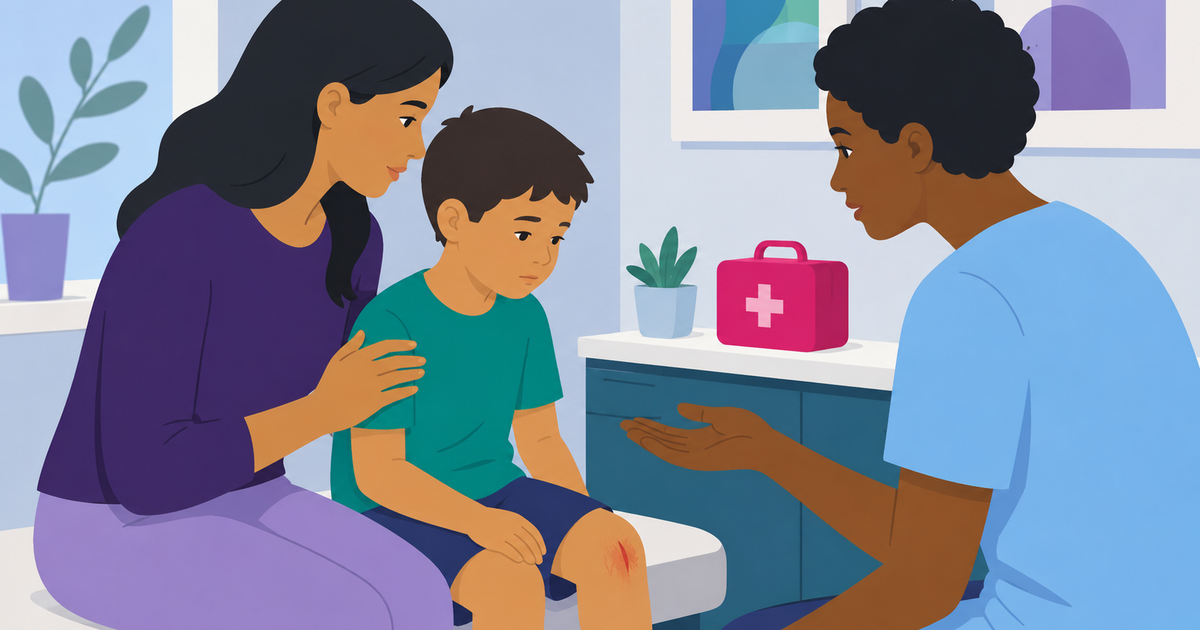
A cut that sends a parent rushing to the medicine cabinet is stressful enough. Figuring out whether that cut actually needs stitches can be even harder. The answer depends less on how much it bleeds and more on the specific characteristics of the wound.
Signs a wound likely needs stitches
Take your child to an urgent care or emergency room if the cut has any of the following characteristics:
- Deep enough to see yellow fat or white tissue — if the wound opens to reveal layers beneath the skin, it will not close properly without stitches
- Gaping edges that won't stay together — wounds under tension (over joints or on the scalp) tend to pull apart and need closure
- Longer than about half an inch — especially on the face, hands, or over a joint
- Bleeding that does not slow after 10 to 15 minutes of firm, continuous pressure
- Location on the face, eyelid, lip, or a joint — these areas heal poorly without proper closure and carry higher cosmetic and functional risk
- Caused by a bite (human or animal) — bite wounds have high infection risk and require evaluation regardless of size
- Contaminated with dirt, glass, or debris that cannot be rinsed out
Stitches vs. skin glue vs. steri-strips
Not every wound that needs closure requires stitches. Clinicians choose the closure method based on wound size, location, tension, and contamination.
- Stitches (sutures) — used for deep, gaping, or high-tension wounds; the most secure option for wounds over joints or on the face
- Skin glue (dermabond) — works well for small, clean, low-tension cuts with smooth edges; not appropriate near the eyes or in hair
- Steri-strips — adhesive tape for minor wounds in low-tension areas; often used as a step-down after stitches are removed
A clinician will make this determination after examining the wound. Do not try to close a deep wound at home with tape — it may seal the surface while allowing deeper tissue to become infected.
Timing matters: the 6-to-8-hour rule
Most wounds can be sutured up to 6 to 8 hours after the injury. Wounds on the face can often be closed up to 12 to 24 hours later because facial blood supply reduces infection risk. After these windows, a clinician may choose to let the wound heal by secondary intention (from the inside out) rather than close it, to reduce infection risk.
If you think your child may need stitches, do not wait to see if it gets better — seek care the same day.
When to go to the ER instead of urgent care
Go directly to the emergency room if the wound involves:
- Exposed tendon or bone
- Severe bleeding that cannot be controlled
- A deep puncture to the chest, abdomen, or neck
- Signs of severed nerves (numbness, tingling, loss of movement beyond the injury)
Most lacerations that do not involve these features can be managed at urgent care.
When to visit urgent care
If your child has a cut that is deep, gaping, over a joint, on the face, or bleeding beyond 15 minutes of pressure, an urgent care clinic can evaluate and close the wound same-day — no appointment needed. Bring the child in quickly; do not pack the wound. Apply firm pressure with a clean cloth during transport.
Frequently asked questions
How do I know if a cut is deep enough to need stitches?
If the wound is gaping, you can see yellow fat or white tissue below the skin surface, or it is longer than about half an inch — particularly on the face, hands, or over a joint — it likely needs professional closure.
What should I do while deciding whether my child needs stitches?
Apply firm, continuous pressure with a clean cloth. Do not peek at the wound every few seconds — sustained pressure is what stops bleeding. If bleeding persists beyond 15 minutes, seek care.
Can urgent care do stitches on children?
Yes. Most urgent care clinics can evaluate and close most lacerations in children, including suturing and skin glue. Bring your child in as soon as possible after the injury.
Is skin glue as effective as stitches for kids?
For small, clean, low-tension wounds with smooth edges, skin glue (dermabond) is comparable to stitches in outcomes. Stitches are still preferred for deeper wounds, wounds under tension, or wounds near the eyes.
Does my child need a tetanus shot after a cut?
It depends on the wound type and your child's vaccination history. Puncture wounds, contaminated wounds, or cuts from rusty objects may require a tetanus booster if your child's last dose was more than 5 years ago. The clinician will assess this at the visit.

Dr. Linda Halbrook is a Board-Certified Family Medicine physician with over 40 years of experience, dedicated to providing comprehensive care to patients across Texas. She retired from practice but currently serves on the Clinical Services Committee of CommonGood Medical, a non-profit organization serving the uninsured in Collin County.
How we reviewed this article
Medically reviewed
View this article's sources and history, and read more about Solv's Content Mission Statement, editorial process, and editorial team.
5 sources
Solv has strict sourcing guidelines and relies on peer-reviewed studies, academic research institutions, and medical associations. We avoid using tertiary references.
Solv’s team of medical writers and experts review and update our articles when new information becomes available.
August 07 2026
Written by Solv Editorial Team
Medically reviewed by: Dr. Rob Rohatsch, MD