Urgent care near me
Sane-day doctor visits
Feel better faster. Get care today.
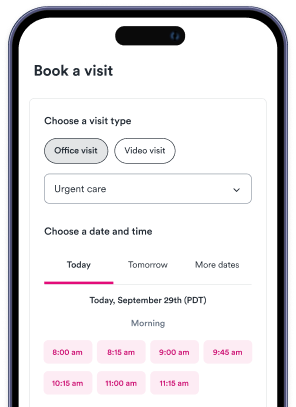
From the clinic or your couch. Find high quality, same-day urgent care for you and your kids. Book an urgent care visit today.

In most U.S. states, a minor under 18 generally needs a parent or legal guardian to provide consent for non-emergency urgent care. There are important exceptions: clinicians will treat a minor in a true emergency without delay, every state allows minors to consent on their own to certain sensitive services, and emancipated or mature minors can usually consent to their own routine care.1,2 The simplest workaround is a signed consent letter from a parent that lets another trusted adult — a grandparent, aunt, coach, or older sibling over 18 — bring the minor to the clinic.
State laws vary, but a few principles apply almost everywhere. Children and teens under 18 are presumed to lack the legal capacity to make their own medical decisions, so a parent or guardian must consent.1 Exceptions fall into four buckets: emergencies, emancipated minors, the mature minor doctrine, and condition-specific statutes that allow minors to consent on their own.
An emergency exception lets clinicians treat a minor when delay could cause serious harm to their life or health.3 This is grounded in the principle of implied consent — the assumption that a reasonable parent would consent if they could be reached. The standard applies to urgent care as well as emergency rooms. Severe bleeding, broken bones, severe asthma attacks, allergic reactions, and dehydration all typically qualify.
Emancipated minors are recognized in every state as legally able to consent to their own medical care. Most states recognize emancipation when the minor is married, on active military duty, financially independent and living apart from their parents, or has been emancipated by a court order.4 Some states also consider a minor who is pregnant or already a parent to be emancipated for medical decisions. Bring a copy of the emancipation order or marriage certificate if you have one — it makes registration faster.
The mature minor doctrine, recognized in many states, allows minors who are usually 14 or 15 and older to consent to their own care when a clinician determines they understand the risks, benefits, and alternatives of the proposed treatment.1 The clinician makes this judgment at the visit. It typically applies to lower-risk, time-sensitive care — strep tests, UTI evaluations, minor injuries — rather than complex or high-risk procedures.
Every state allows minors to consent to at least some categories of care without parental involvement. Common categories include:5
STI testing and treatment, contraception, pregnancy-related care, mental health crisis evaluation, and treatment for substance use. The specific minimum age and what's included vary by state. Confidentiality protections also vary — some states allow billing to keep the visit private; others do not.
If you're a parent who can't bring your teen to urgent care, a signed consent letter is the most reliable workaround. A workable letter includes the minor's full legal name and date of birth, the parent or guardian's full legal name, the name of the adult authorized to accompany the minor, the date(s) the letter is valid, and the parent's phone number and signature. Some clinics provide a standing form; others accept a letter the parent has written and signed. A few will also accept an email or text from the parent's verified number if you call ahead.
Make registration easy by bringing the minor's insurance card, photo ID if available, immunization records or a list of current medications, the parent's consent letter (if applicable), and contact information for the parent or guardian in case the clinician needs to talk with them. Many clinics let you check in online through Solv before you arrive to share documents in advance.
Send the minor to the emergency room rather than urgent care for serious head injuries with loss of consciousness, suspected fractures involving the neck or back, chest pain, suicidal thoughts, signs of a stroke, severe burns, or any concern for life-threatening illness or injury. ER clinicians can and will treat the minor immediately under the emergency exception.
If your teen needs care and you can't be there in person, take five minutes to send a consent letter with the trusted adult. Search Solv to find an urgent care that accepts walk-ins or online booking and call ahead to ask about their consent policy — most clinics will work with you over the phone.
It depends on your state and the clinic. In states that recognize the mature minor doctrine, a 16- or 17-year-old can often consent to routine, lower-risk urgent care on their own. Even where the doctrine applies, individual clinics may still require a parent's verbal or written consent — call ahead to confirm before the visit.
Yes, in most cases — but bring a signed parental consent letter that names the adult, the minor, the date range it covers, and a phone number where the parent can be reached. Most urgent care clinics will accept this; some will call the parent to verify before treating.
Not for an emergency. For routine, non-emergent care, some clinics will turn a minor away without consent and ask them to return with a parent or with a signed letter. Other clinics will treat the minor under the mature minor doctrine or call the parent before proceeding. Policies vary, so calling ahead saves a trip.
Insurance billing isn't tied to parental presence — what matters is whose insurance card is being used. Bring the card and the minor's date of birth. If the visit is for a confidential service like STI testing, ask the clinic about confidential billing options; in some states the Explanation of Benefits can be flagged to protect the minor's privacy.
Every state allows minors to consent on their own to at least some mental health services, especially in a crisis. Urgent care clinicians can evaluate, stabilize, and refer for further care. If there is any concern about suicide or self-harm, go directly to an emergency department or call 988, the suicide and crisis lifeline.
Often yes — many telemedicine services accept minors with parental consent at sign-up, and the visit can happen from a dorm room. For uncomplicated issues like UTIs, sinus symptoms, or rashes, telemedicine is a faster option than in-person urgent care. For anything involving an exam, an injury, or testing, in-person care is still the right choice.
From the clinic or your couch. Find high quality, same-day urgent care for you and your kids. Book an urgent care visit today.

Medically reviewed
View this article's sources and history, and read more about Solv's Content Mission Statement, editorial process, and editorial team.
Solv has strict sourcing guidelines and relies on peer-reviewed studies, academic research institutions, and medical associations. We avoid using tertiary references.
Solv’s team of medical writers and experts review and update our articles when new information becomes available.
Written by Solv Editorial Team
Medically reviewed by: Dr. Rob Rohatsch, MD
Edited by Solv Editorial Team
Edited by Solv Editorial Team
Edited by Solv Editorial Team
Edited by Solv Editorial Team
Edited by Solv Editorial Team
Edited by Solv Editorial Team
Edited by Solv Editorial Team
Edited by Solv Editorial Team
Edited by Solv Editorial Team
From the clinic or your couch. Find high quality, same-day urgent care for you and your kids. Book an urgent care visit today.