Urgent care near me
Sane-day doctor visits
Feel better faster. Get care today.
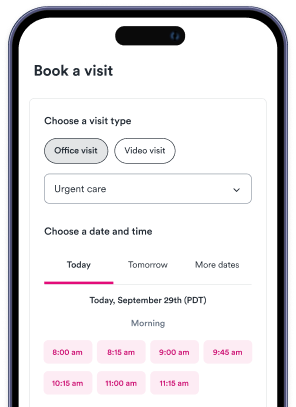
From the clinic or your couch. Find high quality, same-day urgent care for you and your kids. Book an urgent care visit today.

CVS MinuteClinic and urgent care both offer walk-in care, but they are not the same. MinuteClinic is a retail clinic, a smaller setting designed for routine, low-acuity care. Urgent care centers handle a broader scope of injuries and illnesses, including issues that need imaging, splinting, or IV medication.1,2 Knowing the difference saves time and money — and gets you to the right level of care.
Retail clinics are small clinics located inside pharmacies, grocery stores, or big-box retailers. They are typically staffed by nurse practitioners and physician assistants who provide care for a defined list of conditions and preventive services.1 A typical MinuteClinic handles common cold and flu symptoms, sore throat, sinus infections, urinary tract infections, simple skin issues, and routine vaccinations and screenings.
Urgent care centers are walk-in medical clinics that treat acute, non-life-threatening conditions when a primary care provider is not immediately available. They are usually staffed by physicians along with NPs and PAs, equipped with on-site x-ray, basic labs, and capacity for procedures such as suturing, splinting, and IV fluids.2 Urgent care fills the gap between the primary care office and the emergency room.
Scope of care: Retail clinics handle common minor illnesses and preventive care; urgent care can also manage fractures, lacerations, moderate asthma flares, and dehydration.1,2
Staffing: Retail clinics are typically NP- or PA-led; urgent care has physicians on site or available.
Equipment: Urgent care centers usually have x-ray, EKG, IV access, and a wider range of medications than retail clinics.
Cost: Retail clinic visits are generally cheaper than urgent care for the same routine condition. Urgent care costs more but is far less expensive than an emergency room visit.3
Hours: Both offer extended evening and weekend hours, but urgent care centers usually stay open later and have more locations open on holidays.
A retail clinic is a reasonable choice when you have a clearly minor issue, no underlying complications, and need a quick, low-cost visit. Examples include a sore throat to be tested for strep, a likely sinus infection, an uncomplicated UTI in a non-pregnant adult, a flu shot, or a simple skin rash.
Urgent care is the better choice when symptoms are more severe, when imaging or lab work is likely needed, or when the diagnosis is unclear. Common reasons include suspected sprains and fractures, deep cuts that may need stitches, persistent vomiting, asthma flares, eye injuries, severe ear pain, and abdominal pain.2
Call 911 or go directly to the emergency department for chest pain, stroke symptoms (sudden weakness, slurred speech, facial drooping), severe shortness of breath, severe bleeding, head injury with loss of consciousness, severe abdominal pain, signs of sepsis, or any condition you reasonably believe is life-threatening.4
Most major insurance plans, Medicare, and many Medicaid programs cover both retail clinics and urgent care, though copays and benefit details differ.3 Confirm in-network status and your copay before booking. If you are uninsured, ask each clinic for the cash price; many publish transparent self-pay rates.
If you are weighing where to go for same-day care, find a Solv urgent care or walk-in clinic nearby, see real-time wait times, and book a slot online so you can be seen at the right level of care without the guesswork.
Both can prescribe medications when clinically appropriate. MinuteClinic prescriptions are convenient because the pharmacy is on site; urgent care prescriptions are sent electronically to the pharmacy of your choice.
Both accept walk-ins and increasingly support online scheduling. Booking ahead through a platform like Solv typically reduces your wait time and locks in your spot.
Most retail clinics see children above a minimum age (often 18 months and up), but services for kids are limited. Urgent care centers usually see all pediatric ages and can manage broader pediatric concerns.
Visits at both retail clinics and urgent care typically apply to your deductible until it's met, after which your plan's copay or coinsurance applies. Check your benefits summary for specifics.
Yes. Both retail clinics and urgent care commonly offer occupational, sports, school, and DOT physicals, often without insurance, at posted self-pay prices.
It's a good idea, especially for ongoing conditions. Ask the visit clinician to send a summary to your primary care provider, or carry the visit notes with you so your PCP can integrate the visit into your long-term care plan.
From the clinic or your couch. Find high quality, same-day urgent care for you and your kids. Book an urgent care visit today.

Medically reviewed
View this article's sources and history, and read more about Solv's Content Mission Statement, editorial process, and editorial team.
Solv has strict sourcing guidelines and relies on peer-reviewed studies, academic research institutions, and medical associations. We avoid using tertiary references.
Solv’s team of medical writers and experts review and update our articles when new information becomes available.
Written by Solv Editorial Team
Medically reviewed by: Dr. Rob Rohatsch, MD
Edited by Solv Editorial Team
Edited by Solv Editorial Team
Edited by Solv Editorial Team
Edited by Solv Editorial Team
Edited by Solv Editorial Team
From the clinic or your couch. Find high quality, same-day urgent care for you and your kids. Book an urgent care visit today.