Urgent care near me
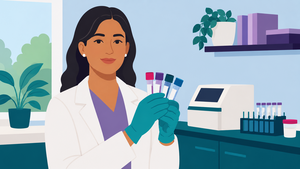
On-demand lab testing
Ensure your health. Get tested today.
Convenient lab testing at your fingertips at more than 5,000 locations nationally. Consult with a doctor, or get tested on your own.

Waiting for STD test results can be stressful, and not knowing how long the process takes makes it harder. The answer depends largely on which infection is being tested for and what type of test your clinic uses. Some results come back in minutes; others take several days. Understanding the differences — and knowing what to do if results are positive — can help you navigate the process with less anxiety.
There are three main categories of tests used for sexually transmitted infections: rapid point-of-care tests, nucleic acid amplification tests (NAATs), and culture-based tests. Each has different turnaround times, accuracy profiles, and appropriate uses.
Rapid tests are designed to give results within 20 to 30 minutes at the clinic. They work by detecting antibodies or antigens in blood or oral fluid. Point-of-care rapid HIV tests and rapid syphilis tests are the most common examples. These tests are convenient and highly useful for same-day decision-making, though a reactive rapid HIV test requires a confirmatory test before a formal diagnosis is made.
NAATs detect the genetic material of a pathogen — bacteria or virus — directly in a urine sample, swab, or blood draw. They are the most sensitive and specific tests available for many STIs, including chlamydia, gonorrhea, and certain strains of herpes. NAATs require laboratory processing, so results typically come back within 1 to 3 business days. Some high-volume clinics use rapid NAAT platforms that return results in a few hours.
Culture-based tests grow the actual organism from a sample. They are less commonly used today because NAATs have largely replaced them for most infections, but cultures are still used when antibiotic sensitivity testing is needed. Cultures for bacterial STIs typically take 2 to 7 days.
Different infections have different testing timelines:
One of the most important concepts in STI testing is the window period — the time between exposure to an infection and when a test can reliably detect it. Testing too early can produce false-negative results even if an infection is present.
For HIV, the antigen/antibody combination test (the most common type used today) has a window period of roughly 18 to 45 days. Most people will test positive within 23 to 90 days of exposure. Testing at 45 days will detect the majority of infections; a negative result at 90 days after exposure is considered conclusive by most guidelines.
Chlamydia and gonorrhea can generally be detected 1 to 2 weeks after exposure, though some guidelines suggest waiting up to 2 weeks to minimize false negatives. Syphilis antibody tests may not become positive until 3 to 6 weeks after exposure. Herpes antibody testing has a longer window — up to 12 to 16 weeks in some cases — which is why swab testing of active sores is preferred when lesions are present.
The CDC provides detailed guidance on testing frequency and timing for different risk levels and exposure types. If you are unsure when to test following a specific exposure, your provider can help you determine the optimal timing for each infection in question.
A positive STI result is not a crisis, but it does require prompt follow-up. Most bacterial infections — chlamydia, gonorrhea, syphilis — are curable with antibiotics. Gonorrhea treatment has become more complex due to antibiotic resistance, and the CDC recommends dual therapy; your provider will prescribe appropriately based on current guidelines.
Viral infections such as herpes and HIV are not curable but are very manageable. Antiviral medications can suppress herpes outbreaks significantly. For HIV, antiretroviral therapy (ART) reduces the viral load to undetectable levels, which both protects your health and prevents transmission to partners.
Partner notification is an important step after a positive result. Most health departments offer confidential partner notification services if you prefer not to contact partners directly. Your provider can walk you through your options.
Many clinics now offer results through a secure patient portal. For NAATs and lab-based blood tests, your results may be posted to the portal before your provider calls you — sometimes by a day or more. If your clinic uses a portal, it is worth checking there first rather than waiting for a phone call. Rapid test results are typically communicated during the visit itself.
If you have not heard back within the expected window — or if your portal shows a result you do not understand — call your clinic directly. Providers can explain what a result means, whether confirmatory testing is needed, and what treatment, if any, is recommended.
If you have had a potential STI exposure, are experiencing symptoms such as discharge, sores, painful urination, or pelvic pain, or simply want confidential same-day STI testing, visit a nearby urgent care clinic for same-day evaluation. Urgent care providers can test for HIV, chlamydia, gonorrhea, syphilis, hepatitis B and C, and more — and can begin treatment for confirmed or suspected infections the same day.
Chlamydia and gonorrhea are most commonly tested by NAAT (nucleic acid amplification test), which is highly accurate and typically returns results within 1 to 3 business days. Some clinics use same-day or next-day rapid NAATs.
Yes, for some infections. Rapid HIV tests and point-of-care syphilis tests give results in 20–30 minutes. Rapid NAATs for gonorrhea and chlamydia are also available at some clinics with results in a few hours. Not every urgent care offers all rapid options — call ahead.
A positive result means the infection was detected. Most STIs, including chlamydia, gonorrhea, and syphilis, are treatable with antibiotics. Some, like herpes and HIV, are managed long-term. Your provider will discuss treatment options and partner notification.
Timing depends on the infection's window period. HIV has an effective window of 18–45 days for antigen/antibody tests. Chlamydia and gonorrhea can be detected as early as 1–2 weeks post-exposure. Ask your provider when to test for each specific exposure.
Yes. Urgent care centers can test for many common STIs including HIV, gonorrhea, chlamydia, syphilis, hepatitis B and C, and herpes. They can also prescribe treatment for confirmed infections or start empiric treatment while results are pending.
Convenient lab testing at your fingertips at more than 5,000 locations nationally. Consult with a doctor, or get tested on your own.

Dr. Linda Halbrook is a Board-Certified Family Medicine physician with over 40 years of experience, dedicated to providing comprehensive care to patients across Texas. She retired from practice but currently serves on the Clinical Services Committee of CommonGood Medical, a non-profit organization serving the uninsured in Collin County.
Medically reviewed
View this article's sources and history, and read more about Solv's Content Mission Statement, editorial process, and editorial team.
Solv has strict sourcing guidelines and relies on peer-reviewed studies, academic research institutions, and medical associations. We avoid using tertiary references.
Solv’s team of medical writers and experts review and update our articles when new information becomes available.
Written by Solv Editorial Team
Medically reviewed by: Dr. Rob Rohatsch, MD
Convenient lab testing at your fingertips at more than 5,000 locations nationally. Consult with a doctor, or get tested on your own.