Urgent care near me
On-demand lab testing
Ensure your health. Get tested today.
Convenient lab testing at your fingertips at more than 5,000 locations nationally. Consult with a doctor, or get tested on your own.
Lab tests analyze samples of blood, urine, saliva, or other body fluids to give your doctor measurable data about your health. Urgent care clinics, primary care offices, and direct-to-consumer labs all offer common testing — often at different price points and wait times. Use this guide to find the tests relevant to your situation and follow the links to deeper explanations of each.
Routine lab work catches problems before symptoms start. Most preventive screening panels test a handful of markers that shift gradually — cholesterol, blood sugar, kidney function, and blood cell counts — and are typically repeated on an annual or biennial basis depending on your age and risk factors.
A standard annual wellness panel typically includes a lipid panel (cholesterol), fasting glucose or A1C, a complete metabolic panel, and a complete blood count. The full list of recommended annual lab tests varies by age, sex, and personal health history — your provider uses your results to decide what to monitor going forward.
A lipid panel measures LDL (low-density lipoprotein), HDL, triglycerides, and total cholesterol in a single blood draw. If you want to understand what each number means and how they relate to cardiovascular risk, see our breakdown of the lipid panel.
A basic metabolic panel (BMP) measures eight markers — glucose, calcium, and six electrolytes and kidney-function indicators. A comprehensive metabolic panel (CMP) adds liver enzymes to that picture. For a detailed explanation of each value, see our guide to the basic metabolic panel.
Fatigue, brain fog, weight changes, and persistent low-grade symptoms are often dismissed — but they are exactly the kind of presentation that a targeted blood panel can explain. The tests below are commonly ordered when a patient doesn't feel well but has no obvious diagnosis.
A TSH test measures how hard your pituitary gland is working to stimulate the thyroid — an elevated TSH usually points to an underactive thyroid, while a suppressed TSH suggests overactivity. If TSH comes back abnormal, a thyroid antibody panel often follows. See what a TSH test measures and how results are interpreted, and our deeper look at thyroid antibody testing.
Iron deficiency and low B12 are two of the most common correctable causes of persistent fatigue and neurological symptoms. A ferritin test measures stored iron; a TIBC panel measures iron-binding capacity; a serum B12 test confirms deficiency. See our articles on B12 deficiency and what to do about it and the total iron-binding capacity test for specifics.
C-reactive protein (CRP) and erythrocyte sedimentation rate (ESR) are the two most commonly ordered markers of systemic inflammation. They don't diagnose a specific condition, but an elevated result tells your doctor to look further. See our guide to the CRP blood test and our broader explainer on inflammatory markers.
When you have a specific reason to get tested — a potential exposure, a new relationship, a workplace requirement, or a symptom that points somewhere — the following categories cover the most common directed testing scenarios.
STI testing panels vary widely depending on which infections are included, what sample type is used, and where you go. For a full breakdown of options, see our complete guide to STD testing. If you're deciding whether urgent care is appropriate for your situation, see whether urgent care does STD tests.
The most common employer-ordered test is a urine panel that screens for five to ten drug classes. Some roles require a hair follicle test, which detects use over a longer window than urine. See our complete guide to drug testing and our specific article on how hair follicle drug tests work.
Home urine pregnancy tests are highly accurate when taken after a missed period. A serum (blood) pregnancy test from a lab detects hCG earlier and can track whether levels are rising appropriately. See our full article on pregnancy test types and accuracy.
Pregnancy and pre-conception planning involve some of the most time-sensitive testing in preventive care. The tests below are commonly ordered by OBs, midwives, and fertility specialists — and some can be accessed through urgent care or walk-in labs when primary care isn't immediately available.
Prenatal panels typically include blood type and Rh factor, CBC, STI screening, glucose tolerance testing, and urine checks for protein and glucose at each visit. See our article on glucose in urine during pregnancy for one of the most frequently flagged prenatal results.
Hormone panels that evaluate ovarian reserve — including FSH, LH, estradiol, and AMH — are increasingly available outside a specialist's office. See our guide to fertility testing for a full breakdown of what's available and when each test is typically ordered.
Patients managing diabetes, high cholesterol, thyroid disease, or kidney disease typically need regular lab work to confirm that treatment is working and to catch early signs of progression. The frequency and specific tests depend on the condition and your provider's protocol.
The A1C test reflects average blood sugar over roughly three months and is the primary monitoring tool for people with diabetes. Fasting glucose and post-meal glucose tests provide shorter-window snapshots. For a detailed look at what your A1C number actually means, see how to understand your blood sugar levels and what it means to have an elevated A1C without a diabetes diagnosis.
For most people being treated for high cholesterol, a lipid panel is ordered every 3 to 12 months until levels stabilize. Kidney function — tracked via creatinine and eGFR — is typically checked annually in healthy adults, more frequently in people with diabetes or hypertension. See our complete guide to creatinine testing and our overview of liver function tests for related panels.
Lab testing is increasingly part of medically supervised weight management programs, both to rule out underlying causes and to guide treatment selection. Thyroid, insulin, hormone, and metabolic panels can reveal why weight loss is stalling or whether a GLP-1 medication is appropriate. See our full article on how lab testing fits into a weight loss plan.
The right testing location depends on what you need, how quickly you need it, and what you're willing to pay out of pocket.
Most urgent care centers run rapid tests — flu, strep, COVID-19, UTI, mono, pregnancy — on-site with results in 15 to 30 minutes. Many also draw blood for panels sent to an affiliated lab, with results in 1 to 3 business days. For a step-by-step walkthrough of the process, see our guide to getting blood work done at urgent care. If you already have a lab order and need to understand the process from script to results, see how to navigate a lab test script.
Self-pay prices at urgent care and walk-in labs are often lower than hospital-based lab fees, and some tests are available as flat-fee panels. For a current breakdown by test type, see our article on blood test costs without insurance.
Lab results arrive as a list of values with reference ranges — but what falls outside the range isn't always clinically significant, and what falls inside isn't always normal for you. Your provider interprets results in the context of your symptoms, history, and trend over time, not just the number on the page.
For a plain-language guide to the most common values — what each one measures, what high or low means, and when to follow up — see our blood test results explainer. If your panel flagged an inflammatory marker, see our specific guide to understanding inflammatory markers in blood work.
If you need a rapid result today, want to skip the wait for a primary care appointment, or are managing a new or recurring symptom, urgent care is a practical option for most of the tests covered in this guide. Use Solv to find an urgent care clinic near you, check real-time wait times, and book online before you leave home.
Fasting — typically 8 to 12 hours of no food or drink except water — is required for lipid panels, fasting glucose, and certain metabolic panels. Tests like a CBC, thyroid panel, or STD screening do not require fasting. Your provider or lab will let you know when you schedule.
Rapid tests — flu, strep, COVID-19, and pregnancy — return results in 15 to 30 minutes at urgent care. Blood draws sent to an external lab typically take 1 to 3 business days. Specialized tests such as cultures or genetic panels may take longer.
Yes. Direct-to-consumer lab services let you order many common tests — STD panels, lipid panels, thyroid tests — without a prescription. Urgent care clinics can also evaluate you and order appropriate tests on-site during a same-day visit.
A basic metabolic panel (BMP) measures eight blood markers: glucose, calcium, and six electrolyte and kidney-function indicators. A comprehensive metabolic panel (CMP) adds liver function markers. Your provider chooses between them based on what they are monitoring.
Individual tests at urgent care or walk-in labs typically range from $25 to $200 depending on the test. Bundled panels often cost less than ordering tests separately. Prices vary by location and provider. See our full breakdown of lab test costs without insurance.
A CBC measures red blood cells, white blood cells, and platelets. It can help detect anemia, infection, clotting disorders, and some blood conditions. It is one of the most commonly ordered routine tests and does not require fasting.
Home pregnancy tests and certain STD tests are highly accurate when used correctly. At-home results for complex blood panels are generally less reliable than lab-processed samples. Any positive or unexpected home test result should be confirmed with a clinical lab test.
An ANA test is a blood test that looks for antibodies in the blood. It is typically used to determine whether you have an autoimmune condition.
An activated partial thromboplastin time (APTT) test measures the amount of time it takes for a blood clot to form in your blood sample. An APTT test is highly similar to a PT test, but measures different coagulation factors. This test is also sometimes used to detect bleeding disorders, and to check how well blood clot medications are working.
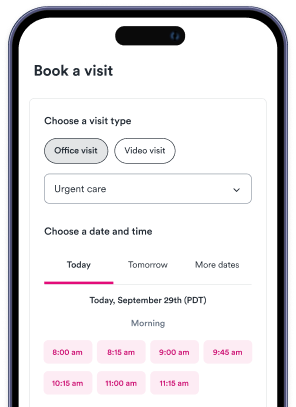
Solv makes it easy for you to find lab testing in your area from reputable, high-quality test providers. Visit Solv, enter the type of lab test you need, and book a same-day or next-day appointment directly from our website.
Convenient lab testing at your fingertips at more than 5,000 locations nationally. Consult with a doctor, or get tested on your own.

Medically reviewed
View this article's sources and history, and read more about Solv's Content Mission Statement, editorial process, and editorial team.
Solv has strict sourcing guidelines and relies on peer-reviewed studies, academic research institutions, and medical associations. We avoid using tertiary references.
Solv’s team of medical writers and experts review and update our articles when new information becomes available.
Written by Solv Editorial Team
Medically reviewed by: Dr. Rob Rohatsch, MD
Edited by Solv Editorial Team
Edited by Solv Editorial Team
Edited by Solv Editorial Team
Edited by Solv Editorial Team
Convenient lab testing at your fingertips at more than 5,000 locations nationally. Consult with a doctor, or get tested on your own.