Urgent care near me
Sane-day doctor visits
Feel better faster. Get care today.
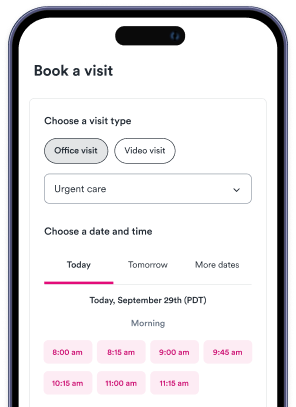
From the clinic or your couch. Find high quality, same-day urgent care for you and your kids. Book an urgent care visit today.

Body aches and chills together almost always point to an active infection — most often the flu, COVID-19, a common cold, or a bacterial illness like strep throat, a urinary tract infection, or early pneumonia. Both symptoms come from the same source: your immune system raising your body's temperature setpoint to fight off whatever it has detected.1,2
When your body senses an infection, the hypothalamus — your brain's thermostat — raises your core temperature setpoint. Your muscles shiver to generate heat, which you feel as chills, and the inflammatory chemicals your immune system releases (cytokines) make your muscles ache.2,3 That same response can be triggered by viruses, bacteria, certain medications, autoimmune disease, and rarely by cancer or a thyroid problem.3
The flu is the classic cause of sudden aches and chills. Symptoms usually come on within hours and include fever, body aches, chills, dry cough, sore throat, headache, and fatigue. Most people recover in a few days to two weeks, though some develop complications like pneumonia.1
COVID-19 overlaps with flu — both can cause aches, chills, fever, cough, and fatigue. A test is the only reliable way to tell them apart, and the answer matters because antiviral options differ.5
Colds can cause mild aches but usually don't produce chills. If you're shivering and feeling deep muscle pain, the flu, COVID-19, or a bacterial infection is more likely than a typical cold.1
Strep throat, urinary tract infections, sinus infections, skin infections (cellulitis), and pneumonia can all cause aches and chills. Bacterial infections often need antibiotics — they don't resolve on their own the way most viruses do.3
Hypothyroidism, low blood sugar, side effects from certain medications, malaria (in travelers), Lyme disease, and autoimmune flare-ups can all produce chills with or without aches.2,3,6
You can absolutely have chills without registering a fever on a thermometer. The shivering happens because your body is trying to reach a higher setpoint — the temperature climb often follows. Non-infectious causes include being cold, hypothyroidism, low blood sugar, anemia, panic attacks, and reactions to certain medications.2,6
For uncomplicated viral illness, focus on rest, fluids, and symptom management:
See a clinician — same day at urgent care is fine for most cases — if you have:4
Call 911 or go to the ER for:4,7
If body aches and chills are slowing you down and you're not sure what's causing them, urgent care can usually diagnose the most common culprits (flu, COVID-19, strep, UTI) in a single visit. You can find and book same-day urgent care on Solv in under a minute. If your symptoms include any of the red flags above, head to the ER instead.
Yes. Chills happen when your hypothalamus raises your body's temperature setpoint, even if a thermometer hasn't caught up yet. They can also occur with low body temperature, hypothyroidism, low blood sugar, or anxiety — situations where infection isn't the driver.2
Influenza triggers a strong cytokine response. Those signaling molecules cause inflammation in muscle tissue and lower your pain threshold, which is why aches feel disproportionate to what the virus is doing locally.3
Either can help. Acetaminophen is gentler on the stomach and safer if you're dehydrated. Ibuprofen reduces inflammation more directly. Follow the dose on the label and don't combine with prescription pain medications without checking with a clinician.
For uncomplicated viral illnesses, most people improve within three to seven days. Symptoms that worsen after day three, return after improving, or last beyond ten days warrant a clinical visit.
They can be. COVID-19 and influenza overlap heavily in early symptoms — both can cause aches, chills, fever, and fatigue. Testing is the only way to tell them apart, and treatment options differ.5
Go to the ER for trouble breathing, chest pain, confusion, a stiff neck with fever, persistent vomiting, severe abdominal pain, or shaking chills with a fever above 103°F. These can signal sepsis, meningitis, or another emergency.
From the clinic or your couch. Find high quality, same-day urgent care for you and your kids. Book an urgent care visit today.

Dr. Linda Halbrook is a Board-Certified Family Medicine physician with over 40 years of experience, dedicated to providing comprehensive care to patients across Texas. She retired from practice but currently serves on the Clinical Services Committee of CommonGood Medical, a non-profit organization serving the uninsured in Collin County.
Medically reviewed
View this article's sources and history, and read more about Solv's Content Mission Statement, editorial process, and editorial team.
Solv has strict sourcing guidelines and relies on peer-reviewed studies, academic research institutions, and medical associations. We avoid using tertiary references.
Solv’s team of medical writers and experts review and update our articles when new information becomes available.
Written by Solv Editorial Team
Medically reviewed by: Dr. Rob Rohatsch, MD
Medically reviewed by: Alicia Tezel, MD, FAAP, FCUCM
Medically reviewed by: Alicia Tezel, MD, FAAP, FCUCM
Medically reviewed by: Alicia Tezel, MD, FAAP, FCUCM
Medically reviewed by: Alicia Tezel, MD, FAAP, FCUCM
Medically reviewed by: Alicia Tezel, MD, FAAP, FCUCM
Medically reviewed by: Linda S. Halbrook, MD
Edited by Solv Editorial Team
Edited by Solv Editorial Team
Edited by Solv Editorial Team
Edited by Solv Editorial Team
Edited by Solv Editorial Team
Edited by Solv Editorial Team
Edited by Solv Editorial Team
From the clinic or your couch. Find high quality, same-day urgent care for you and your kids. Book an urgent care visit today.