You're tired in a way that doesn't quite fit the word "tired." You're withdrawn, joyless some days, difficult to motivate, and wondering whether what you're feeling is just burnout from a relentless few months — or something more clinical, something that needs real treatment. Emotional exhaustion and depression overlap enough in their symptoms that even experienced clinicians use structured screening tools to distinguish them. Understanding how they differ isn't just semantics: it shapes how you approach recovery and what kind of help will actually work.
What emotional exhaustion actually is
Emotional exhaustion is a state of depletion that results from sustained exposure to high interpersonal, cognitive, or caregiving demands. It is most commonly discussed in the context of burnout — the occupational syndrome defined by the World Health Organization as a consequence of chronic, unmanaged workplace stress — but it also occurs in caregivers, parents, and anyone enduring a prolonged period of high demand without adequate recovery.
The hallmark of emotional exhaustion is that it is responsive to context. A person who is emotionally exhausted from a particularly brutal work quarter may feel genuinely relieved and lighter on a weekend camping trip away from obligations. The capacity for enjoyment, connection, and positive emotion is diminished — but not gone. Given the right circumstances — genuine rest, removal from the stressor, a moment of real play or connection — the person can still access positive emotional states. This responsiveness to context is a meaningful diagnostic clue.
Emotional exhaustion tends to have a clear narrative: there was a period of accumulating demand, and the depletion followed it. People experiencing it can often point to exactly where things started feeling wrong, and identify the factors driving it. The symptoms don't feel mysterious or disconnected from circumstances.
What depression actually is
Major depressive disorder is a clinical condition involving a persistent change in mood, cognition, and functioning that is not simply a proportionate response to circumstances. According to the National Institute of Mental Health, depression is characterized by a cluster of symptoms lasting at least two weeks, including depressed mood most of the day, markedly diminished interest or pleasure in activities (anhedonia), changes in sleep, appetite changes, fatigue, difficulty concentrating, feelings of worthlessness or excessive guilt, and in severe cases, thoughts of death or suicide.
The critical distinction from emotional exhaustion lies in how the mood responds to context. In depression, the low mood, flatness, or hopelessness tends to be pervasive — it doesn't lift meaningfully in circumstances that should logically produce enjoyment. A person with depression may go on that camping trip and still feel hollow, disconnected, or low throughout. They may report being unable to feel pleasure even when doing things they once loved. This failure of positive experience to penetrate the mood is anhedonia, and it is one of the two core diagnostic criteria for major depressive disorder.
Depression also has a different relationship with sleep. Emotional exhaustion generally responds to rest — a genuinely recuperative night or a vacation can produce a real improvement. Depression is frequently characterized by sleep that doesn't restore; people wake from a full night of sleep still feeling depleted, low, or heavy. Some people with depression sleep excessively (hypersomnia) and feel no better for it; others experience early morning awakening and cannot return to sleep. Either way, sleep does not produce the relief it should.
Where they overlap — and why it matters
Both emotional exhaustion and depression produce fatigue, difficulty concentrating, social withdrawal, reduced motivation, and irritability. Both can disrupt sleep. Both can make ordinary tasks feel disproportionately difficult. This overlap is why people often can't tell, from the inside, which one they're dealing with — and why self-diagnosis is unreliable.
The distinction matters clinically because the most effective interventions differ. Emotional exhaustion responds well to boundary-setting, recovery time, removal of the stressor, stress management techniques, and supportive therapy focused on work-life balance, coping skills, and burnout prevention. It is fundamentally a resource problem: the demand has exceeded the supply of emotional and cognitive reserves, and the treatment is to change the ratio.
Depression, while also benefiting from therapy and lifestyle changes, is more likely to require medication alongside those interventions. The neurobiology of depression involves changes in monoamine systems — serotonin, norepinephrine, dopamine — that behavioral intervention alone may not adequately address. Attempting to "recover" from clinical depression through rest and lifestyle change alone may result in partial improvement at best, and can result in the condition becoming more entrenched over time. Treatment delay is associated with worse outcomes.
There is also an important relationship between the two conditions: prolonged, unaddressed emotional exhaustion can progress into clinical depression. The brain under chronic stress undergoes measurable changes — in HPA axis regulation, in inflammatory signaling, in prefrontal cortical function — that can shift a situational depletion response into a more persistent and treatment-requiring disorder. This is one reason not to simply wait and see when emotional exhaustion is severe or has lasted months.
The PHQ-9 (Patient Health Questionnaire-9) is a validated, widely used nine-item screening tool for depression that asks about symptom frequency over the previous two weeks. It is used in primary care, urgent care, and mental health settings to quantify symptom severity and track treatment response. A score of 10 or higher on the PHQ-9 suggests at least moderate depression and typically prompts further evaluation and discussion of treatment options.
The PHQ-9 is available freely online through the NIH and other public health resources, and completing it before a provider visit can make the conversation more efficient. However, the score is a tool for clinical conversation, not a diagnosis — a provider will interpret it alongside your history, symptoms, and other factors.
If your low mood, fatigue, and withdrawal are tied to a clearly identifiable stressor that has recently improved or resolved, and you're noticing gradual improvement as you rest and recover — emotional exhaustion is the more likely explanation. If your symptoms have persisted for more than two weeks, seem unresponsive to rest, feel disconnected from identifiable causes, or include persistent hopelessness or inability to feel pleasure, a clinical evaluation is important.
What treatment looks like for each
For emotional exhaustion, first-line approaches include reducing the demand load where possible, setting firmer boundaries at work or in caregiving roles, and engaging in genuinely restorative activities rather than passive stimulation (scrolling is not recovery). Cognitive-behavioral therapy focused on burnout, stress management skills training, and attention to sleep hygiene and physical activity all have evidence behind them. The recovery trajectory is usually gradual but measurable over weeks.
For depression, evidence-based treatment typically involves a combination of psychotherapy — cognitive behavioral therapy and interpersonal therapy have the strongest evidence base — and in moderate-to-severe cases, antidepressant medication. The American Academy of Family Physicians notes that collaborative care models, combining a primary care provider, therapist, and case manager, produce better depression outcomes than medication alone. Response to treatment takes time — antidepressants typically take 4–6 weeks to show full effect — which is another reason early intervention matters.
When to visit urgent care
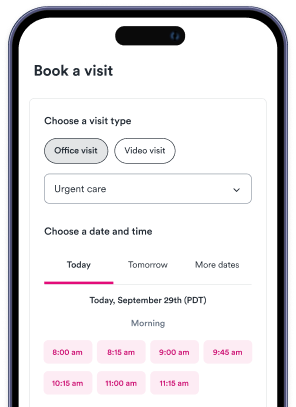
If you've been feeling persistently low, empty, or depleted for more than two weeks — especially if sleep isn't restoring you, if you've lost interest in things that used to matter, or if you're experiencing hopelessness — don't wait for a scheduled appointment weeks away. Urgent care providers can administer the PHQ-9 screening, have a real conversation about what you're experiencing, and initiate first-line treatment including therapy referrals and medication when clinically appropriate. Solv makes it easy to find same-day mental health telehealth or in-person urgent care appointments near you. You don't need to have it all figured out before you go — that's what the appointment is for.
 Urgent care near me