Urgent care near me
Sane-day doctor visits
Feel better faster. Get care today.
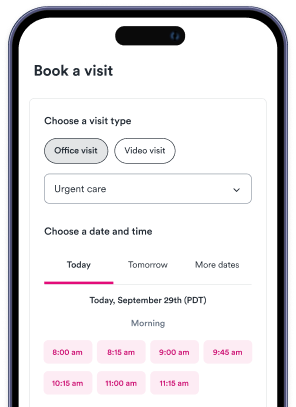
From the clinic or your couch. Find high quality, same-day urgent care for you and your kids. Book an urgent care visit today.

Most people think of urgent care as the place to go for a cold or a cut that needs stitches. But the scope of what urgent care can diagnose, treat, and test for is much broader than that — and for many patients, it replaces both the primary care office visit and, for minor emergencies, the ER. Here's a complete look at what urgent care handles and where its limits are.
Urgent care centers are equipped to evaluate, diagnose, and treat a wide range of acute illnesses. Most clinics run rapid tests for common infections on-site and can prescribe medications when indicated. Common illnesses treated include:
Beyond illness, urgent care handles a wide range of traumatic injuries that would otherwise mean a long wait in the ER. Most urgent care centers have on-site X-ray and trained staff to perform minor procedures:
Urgent care is not just reactive. Many clinics offer a growing menu of diagnostic and preventive services that make them a practical substitute for a primary care visit when your regular doctor isn't available:
Urgent care is not equipped to handle life-threatening emergencies, complex chronic conditions requiring specialist management, or situations needing surgery or hospital admission. Go to an emergency room or call 911 for:
Urgent care clinics also typically don't manage complex chronic conditions (such as adjusting long-term diabetes or heart failure medications) or perform procedures requiring general anesthesia.
For most non-emergency illnesses and injuries, urgent care offers same-day treatment with far shorter waits and lower costs than an emergency room. Use Solv to find an urgent care clinic near you, check real-time wait times, and book online before you leave home.
Urgent care can evaluate and treat non-displaced (simple) fractures. Most clinics have on-site X-ray and can apply splints or casts. Compound fractures or breaks requiring surgery should be treated at an emergency room.
Yes. Urgent care clinics can perform a urinalysis on-site, confirm a urinary tract infection, and prescribe antibiotics at the same visit.
Most urgent care centers have on-site X-ray equipment and can image suspected fractures, chest conditions, and foreign bodies during your visit.
Yes, if a bacterial infection is diagnosed — such as strep throat, sinus infection, UTI, or skin infection — urgent care providers can prescribe antibiotics at the time of your visit.
Urgent care is not equipped for life-threatening emergencies (chest pain, stroke, severe trauma), conditions requiring surgery, or complex chronic disease management. Those situations require an emergency room or specialist.
From the clinic or your couch. Find high quality, same-day urgent care for you and your kids. Book an urgent care visit today.

Dr. Linda Halbrook is a Board-Certified Family Medicine physician with over 40 years of experience, dedicated to providing comprehensive care to patients across Texas. She retired from practice but currently serves on the Clinical Services Committee of CommonGood Medical, a non-profit organization serving the uninsured in Collin County.
Medically reviewed
View this article's sources and history, and read more about Solv's Content Mission Statement, editorial process, and editorial team.
Solv has strict sourcing guidelines and relies on peer-reviewed studies, academic research institutions, and medical associations. We avoid using tertiary references.
Solv’s team of medical writers and experts review and update our articles when new information becomes available.
Written by Solv Editorial Team
Medically reviewed by: Dr. Rob Rohatsch, MD
Edited by Solv Editorial Team
From the clinic or your couch. Find high quality, same-day urgent care for you and your kids. Book an urgent care visit today.