Urgent care near me
Sane-day doctor visits
Feel better faster. Get care today.
From the clinic or your couch. Find high quality, same-day urgent care for you and your kids. Book an urgent care visit today.

Walking into urgent care already feeling sick or injured is stressful enough. Scrambling to remember your insurance group number or your child's allergy history at the front desk only adds to that stress — and slows everyone down. A few minutes of preparation before you leave home can make the difference between a fast, smooth visit and one full of delays.
Knowing your insurance details in advance makes check-in much faster. Our guide to how urgent care works with insurance walks through what to verify before your visit.
Every urgent care visit starts at the front desk, and two things speed up that process more than anything else: a valid photo ID and your insurance information.
Bring a government-issued photo ID — a driver's license, state ID card, or passport all work. Your insurance card should come with you as well. If your insurer provides a digital card in their app, that typically works too, but a physical card is the safest backup.
If you don't have insurance, you're still welcome at urgent care. Ask about self-pay or cash-pay rates when you check in — many clinics offer significantly reduced pricing for uninsured patients who ask upfront. See our guide on how much urgent care costs without insurance for typical ranges.
For pediatric visits, parents should also be prepared to show they have legal authority to consent to care. If you're a grandparent, stepparent, or other caregiver who is not the child's legal guardian, bring written authorization from the parent or guardian, or call ahead to ask what the clinic requires.
One of the most useful things you can bring to any medical appointment is a complete, up-to-date list of every medication you take — prescription and over-the-counter. Include the drug name, dosage, and how often you take it. If you take supplements or herbal products regularly, include those too.1
This information directly affects what a provider can safely prescribe. Drug interactions are a real and preventable risk. A provider who doesn't know you're already taking a blood thinner or an SSRI can't make the safest decisions about what to add.2 If your list isn't written down, your pharmacy can usually provide one quickly — many pharmacy apps also display a full medication history.
Know your allergy history before you arrive, especially for medication allergies. The most clinically significant ones to have ready are antibiotic allergies — penicillin allergies are among the most commonly reported — and any allergy that caused a serious reaction such as hives, difficulty breathing, or anaphylaxis. This information is essential for safe prescribing.1
If you have known seasonal or environmental allergies, those are helpful to mention but less urgent. The priority is drug allergies and any history of severe reactions.
You don't need to bring a stack of old records. What's genuinely useful is a clear, brief summary of any conditions that might be relevant to today's visit. If you have diabetes, heart disease, a recent surgery, or an ongoing condition being treated by a specialist, mention it — and if you know your specialist's name and clinic, that information helps the urgent care provider reach out if needed.1
For visits involving an injury, it helps to know your tetanus vaccination status, particularly the year of your last booster. The standard recommendation is a booster every 10 years, and urgent care providers routinely ask about this for wound care and lacerations.3
Pediatric visits require a little extra preparation. In addition to your own ID and the child's insurance card, bring:
Having the child's most recent weight is a bonus — pediatric medication dosing is weight-based, and having an accurate number speeds things up.
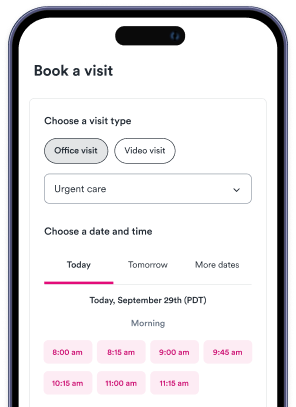
If you're booking through Solv, you have the option to complete registration paperwork before you arrive. This means your demographic information, insurance details, medication list, allergies, and reason for visit are already in the system when you walk through the door. Check-in becomes a formality rather than a bottleneck, and the provider has context on your visit before they enter the room.
Taking five minutes to fill out pre-visit paperwork on Solv is one of the single most effective things you can do to make your visit faster. It also reduces the chance of information being missed or entered incorrectly during a rushed check-in.
You do not need to bring your entire medical history, old test results, or a list of every doctor you've ever seen. Urgent care visits are focused on acute, same-day concerns. What matters is what's relevant to the problem you're coming in for today — and the essentials listed above cover the vast majority of situations.
If you may need documentation from your visit, our guide on getting a doctor's note from urgent care explains exactly what to request. If you're paying out of pocket, see our guide on urgent care costs without insurance and strategies to lower your bill.
Bring a government-issued photo ID (driver's license, state ID, or passport), your health insurance card, a list of current medications and dosages, and your allergy history. For pediatric visits, also bring the child's vaccination records and written caregiver authorization if you're not the legal parent or guardian.
Yes — your insurance card is one of the most important things to bring. If you have a digital card in your insurer's app, that usually works, but a physical card is the safest backup. If you don't have insurance, ask about self-pay rates at check-in.
Include all prescription medications, over-the-counter drugs (such as pain relievers, antacids, and antihistamines), vitamins, and supplements. Note the drug name, dosage, and how often you take it. Your pharmacy can usually provide a full list quickly if you don't have one written down.
The most important allergy information is any known drug allergies — especially antibiotic allergies — and any past reactions that were severe (hives, breathing difficulty, or anaphylaxis). Food and environmental allergies are also helpful to mention, but drug allergies take priority.
For a child's visit, bring your own photo ID, the child's insurance card, a medication list with dosages, known allergies, vaccination records or the date of the last immunization, and the child's pediatrician's name and contact. If you're not the legal parent or guardian, bring written authorization from the parent.
Yes — if you book through Solv, you can complete registration paperwork in advance. This puts your insurance details, medication list, allergies, and reason for visit into the system before you arrive, making check-in faster and reducing the chance of errors.
From the clinic or your couch. Find high quality, same-day urgent care for you and your kids. Book an urgent care visit today.

Medically reviewed
View this article's sources and history, and read more about Solv's Content Mission Statement, editorial process, and editorial team.
Solv has strict sourcing guidelines and relies on peer-reviewed studies, academic research institutions, and medical associations. We avoid using tertiary references.
Solv’s team of medical writers and experts review and update our articles when new information becomes available.
Written by Solv Editorial Team
Medically reviewed by: Dr. Rob Rohatsch, MD
Edited by Solv Editorial Team
Edited by Solv Editorial Team
Edited by Solv Editorial Team
Edited by Solv Editorial Team
Edited by Solv Editorial Team
Edited by Solv Editorial Team
From the clinic or your couch. Find high quality, same-day urgent care for you and your kids. Book an urgent care visit today.