Urgent care near me
On-demand lab testing
Ensure your health. Get tested today.
Convenient lab testing at your fingertips at more than 5,000 locations nationally. Consult with a doctor, or get tested on your own.
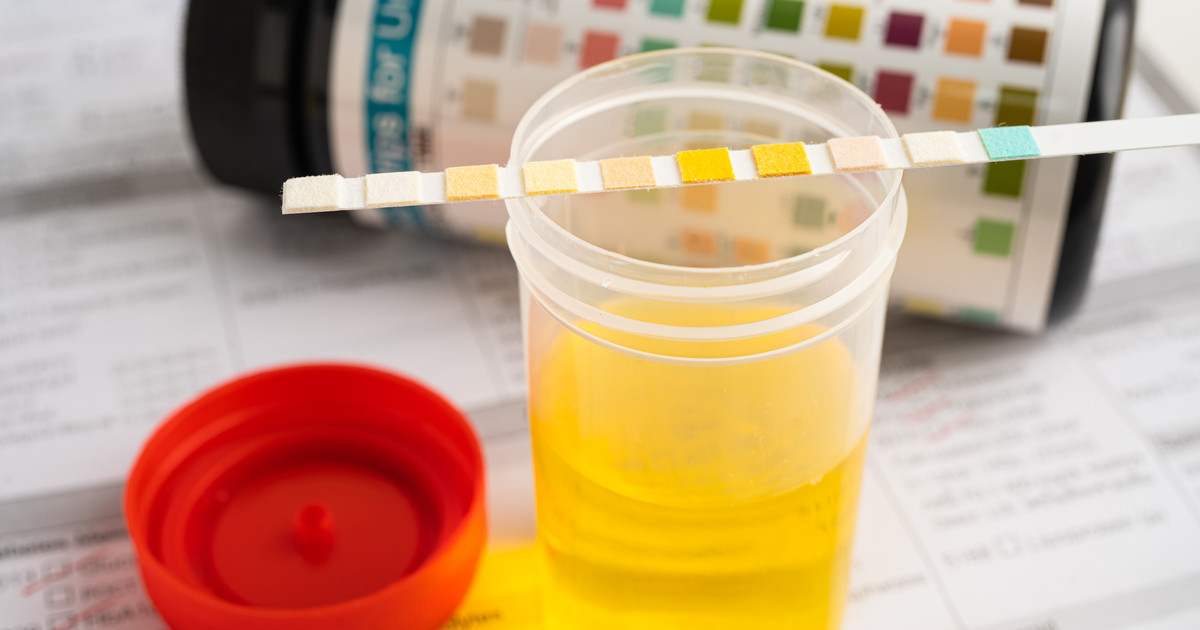
Glucose in urine — known clinically as glycosuria — means a urine test detected sugar that should normally have been reabsorbed by the kidneys. In most cases it points to elevated blood sugar from diabetes, but several non-diabetic conditions can also cause it.1,2 A positive urine glucose result is a screening signal, not a diagnosis, and the right next step is a blood-based test.
The kidneys filter glucose out of the blood and then reabsorb almost all of it back through specialized transporters in the proximal tubule. When blood glucose exceeds roughly 180 mg/dL — the renal threshold — the transporters become saturated and the excess glucose passes into urine.1 Healthy people excrete only trace amounts (under 25 mg/dL), which is below the detection limit of most clinical dipsticks.3
Diabetes mellitus is by far the most common cause. Persistently high blood sugar in type 1, type 2, and gestational diabetes pushes glucose past the renal threshold, where it spills into urine.2,4
Pregnancy can produce glycosuria for two reasons: gestational diabetes raises blood sugar, and pregnancy itself temporarily lowers the renal reabsorption threshold, so a pregnant person may show glucose in urine at lower blood sugar levels than a non-pregnant person.4
Renal glycosuria is an inherited disorder where the SGLT2 transporter in the kidneys is impaired. Glucose leaks into urine despite normal blood sugar, and the condition is generally benign.4
Fanconi syndrome impairs reabsorption of glucose, amino acids, phosphate, and other substances in the proximal tubule. It can be inherited or caused by drugs, heavy metals, or certain kidney diseases.4
Acute kidney injury and interstitial nephritis can sometimes produce glycosuria as the tubules lose their reabsorptive capacity.5
Medications — especially the SGLT2 inhibitor class used for type 2 diabetes (empagliflozin, dapagliflozin, canagliflozin) — cause glucose in urine by design.
Glycosuria itself rarely causes symptoms. When symptoms appear, they typically reflect the underlying cause:
If glycosuria is caused by uncontrolled diabetes, urgent symptoms may include nausea, abdominal pain, fruity-smelling breath, confusion, or rapid breathing. These can signal diabetic ketoacidosis and require emergency care.
The most common test is the urine dipstick, a chemical strip dipped briefly into a urine sample. The reagent pad changes color based on glucose concentration and is read against a reference scale or by an automated analyzer.6 Dipsticks are highly specific for glucose — a positive almost always reflects real glucose — but they are not sensitive enough to catch mild or early hyperglycemia, so they cannot screen for diabetes on their own.6,7
If the dipstick is positive, the standard next steps are:
Any positive urine glucose result should be discussed with a clinician. See care promptly if you also have unexplained weight loss, persistent fatigue, increased thirst, blurred vision, or recurrent infections. Go to an emergency room — not urgent care — if you have nausea and vomiting, severe abdominal pain, fruity breath, rapid breathing, or confusion, all of which can indicate diabetic ketoacidosis.
Treatment targets the cause, not the urine finding itself. For diabetes, that typically means lifestyle changes (diet, weight management, activity), oral medications such as metformin or SGLT2 inhibitors, and in some cases insulin. For gestational diabetes, treatment focuses on diet, monitoring, and sometimes insulin until delivery. Renal glycosuria usually requires no treatment beyond confirming the diagnosis. Fanconi syndrome and acute kidney injury are managed by treating the underlying disease and replacing electrolytes as needed.
If a routine urinalysis flags glucose, do not wait. Solv can connect you to a same-day urgent care visit for a confirmatory blood glucose, A1C, and basic metabolic panel — most clinics return results the same day or by the next morning. Search your zip code on Solv to book a visit at a nearby urgent care.
A single sugary meal usually does not push blood glucose high enough to spill into urine in a healthy person, because the kidney threshold is around 180 mg/dL. Severe acute stress, illness, or steroid medication can transiently raise blood sugar enough to produce glycosuria. If a one-off urine test shows glucose, your provider will typically repeat it fasting and add a blood-based test.
No. Renal glycosuria — an inherited condition where the kidneys leak glucose despite normal blood sugar — produces glucose in urine without diabetes. Pregnancy, Fanconi syndrome, certain medications (including SGLT2 inhibitors), and acute kidney injury can also cause it. Your provider distinguishes between these by checking blood glucose, A1C, and kidney function.
Home strips are highly specific (a positive result usually means glucose is present) but not sensitive enough to catch early or fluctuating high blood sugar. They cannot replace a blood glucose meter or A1C. Use them as a screening tool, not a diagnostic one, and follow up any positive with your provider.
Dipstick results are reported semi-quantitatively from negative through trace, +1 (≈100 mg/dL), +2 (≈250 mg/dL), and higher. Any non-negative result warrants a blood glucose check. A trace result on a non-fasting sample in someone with no diabetes risk factors may not be clinically significant, but your clinician will decide based on the full picture.
Yes — by design. SGLT2 inhibitors like empagliflozin and dapagliflozin work by causing the kidneys to excrete glucose. Patients on these medications will have glucose in their urine even with controlled blood sugar. Tell your provider about all medications before a urinalysis is interpreted.
Yes. Urgent care clinics can run a urinalysis, fasting blood glucose, and A1C in a single visit, and most can also do a urine ketone check. If results suggest type 1 diabetes, severe hyperglycemia, or diabetic ketoacidosis, urgent care will refer or transfer you to an ER. For routine evaluation of mild glycosuria, urgent care is an appropriate starting point.
Convenient lab testing at your fingertips at more than 5,000 locations nationally. Consult with a doctor, or get tested on your own.

Medically reviewed
View this article's sources and history, and read more about Solv's Content Mission Statement, editorial process, and editorial team.
Solv has strict sourcing guidelines and relies on peer-reviewed studies, academic research institutions, and medical associations. We avoid using tertiary references.
Solv’s team of medical writers and experts review and update our articles when new information becomes available.
Written by Solv Editorial Team
Medically reviewed by: Dr. Rob Rohatsch, MD
Edited by Solv Editorial Team
Edited by Solv Editorial Team
Edited by Solv Editorial Team
Edited by Solv Editorial Team
Convenient lab testing at your fingertips at more than 5,000 locations nationally. Consult with a doctor, or get tested on your own.