Urgent care near me
Sane-day doctor visits
Feel better faster. Get care today.
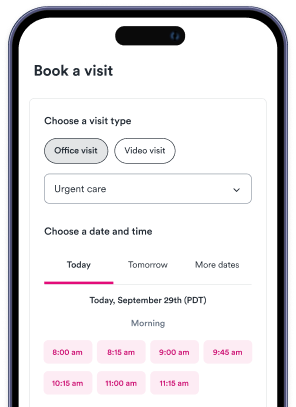
From the clinic or your couch. Find high quality, same-day urgent care for you and your kids. Book an urgent care visit today.
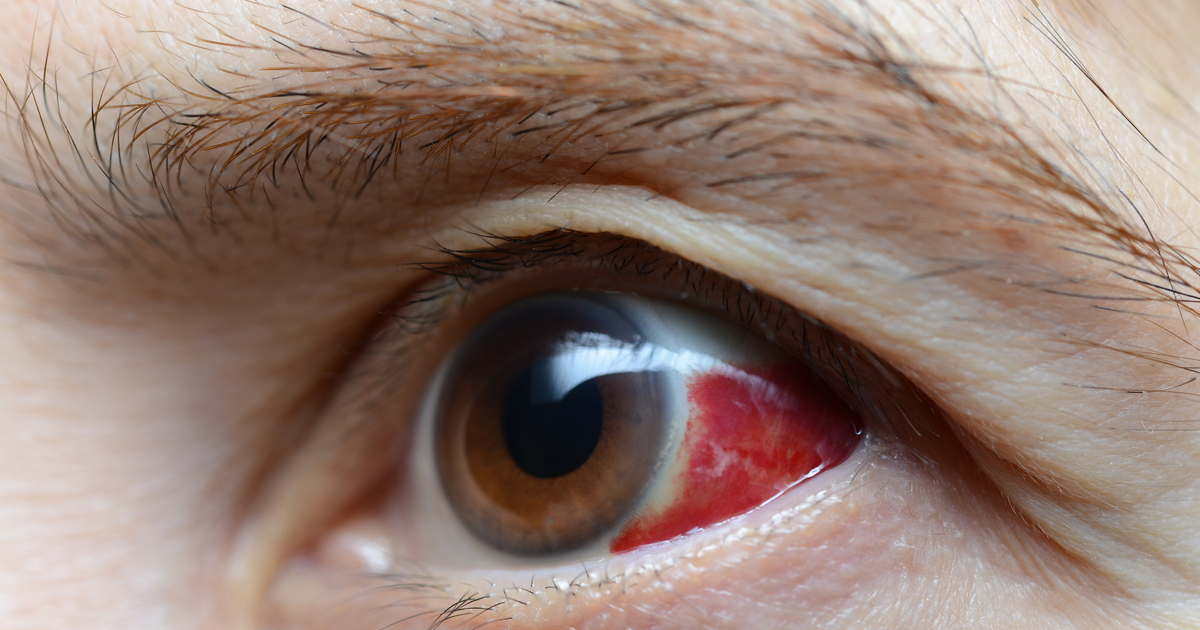
A hemorrhage is heavy or uncontrolled bleeding that the body cannot stop on its own. It can be external (from a wound) or internal (inside the abdomen, chest, brain, or muscle compartments). Severe hemorrhage is a medical emergency — losing more than about 30% of total blood volume can cause hypovolemic shock and become life-threatening within minutes.1,2 For any heavy bleeding that won't stop with direct pressure, signs of internal bleeding, or bleeding from a head, chest, or abdominal injury, call 911 immediately. Urgent care can manage minor bleeding wounds that aren't worrisome enough for the ER.
The word "hemorrhage" simply means heavy bleeding. Clinicians classify hemorrhage by how much blood is lost relative to total blood volume:2
Class I (up to 15% loss): usually no symptoms; the body compensates well. Class II (15–30% loss): early signs of shock — dizziness, fatigue, nausea, fast heart rate, mild shortness of breath. Class III (30–40% loss): pale, clammy skin; rapid weak pulse; rapid breathing; confusion or anxiety; falling blood pressure. Class IV (over 40% loss): severe shock — drowsiness or unconsciousness, very low blood pressure, weak or absent pulse. Class III and IV are immediately life-threatening and require trauma center care.
For external bleeding, blood that soaks through gauze quickly, spurts in time with a heartbeat (suggesting arterial bleeding), or fails to slow after 10 to 15 minutes of firm direct pressure is severe. For internal bleeding, watch for:3
Sudden severe pain in the chest, abdomen, or pelvis after an injury; pale, cool, sweaty skin; lightheadedness or fainting; rapid, shallow breathing; a fast or weak pulse; nausea or vomiting blood (which may look like coffee grounds); blood in stool (dark, tarry, or bright red); coughing up blood; or bruising and swelling that's expanding. Confusion or drowsiness can be a late sign and is an emergency.
The American College of Surgeons' "Stop the Bleed" steps work for adults and children:4
Call 911 or have someone else call. Stay safe — make sure the scene is secure. Find the source of bleeding and expose the wound. Apply firm, steady direct pressure with both hands using sterile gauze, a clean cloth, or even clothing. Do not lift the dressing to peek — add more material on top if it soaks through. If bleeding from an arm or leg won't stop with pressure, apply a commercially made tourniquet 2 to 3 inches above the wound (not on a joint), tighten until bleeding stops, and write the time on the patient's forehead or the tourniquet. A tourniquet can save a life and is unlikely to cause permanent harm if used correctly.
Most nosebleeds, small cuts, and bleeding from a minor injury can be controlled at home. Pinch the soft part of the nose for 10 to 15 minutes while sitting upright and leaning forward. Apply firm pressure to a cut with a clean cloth for at least 10 minutes. Skip aspirin, alcohol, and heavy exercise for several hours afterward. If a wound is deep, gaping, or longer than half an inch, head to urgent care for cleaning and possible sutures.
Call 911 immediately for bleeding that won't stop with pressure, suspected internal bleeding, head or neck trauma, severe abdominal or chest injury, vomiting or coughing up significant blood, bright-red rectal bleeding with weakness or fainting, or bleeding in someone on blood thinners who is showing signs of shock. Use urgent care for minor cuts that need cleaning and stitches, controlled nosebleeds in someone otherwise stable, small puncture wounds, and minor wound infections. When in doubt, call 911 — bleeding can escalate fast.
People taking blood thinners (warfarin, apixaban, rivaroxaban, dabigatran, clopidogrel, or aspirin) bleed more and stop bleeding more slowly. People with hemophilia, von Willebrand disease, or advanced liver disease are also at higher risk. Pregnant patients with sudden heavy vaginal bleeding or severe abdominal pain need emergency evaluation. If you take a blood thinner and have a fall or head injury, get evaluated even if you feel fine — internal head bleeding can develop hours later.5
Emergency teams start with the ABCs (airway, breathing, circulation), large-bore IV access, and rapid fluid or blood replacement. Imaging (CT or ultrasound) identifies the source of internal bleeding. Specific treatments include surgery for trauma, endoscopy for GI bleeding, interventional radiology for vascular bleeding, and reversal agents for people on blood thinners.2 Severe bleeding often requires a blood transfusion.
If you're reading this in an emergency, stop and call 911. If you're preparing — take 15 minutes to learn the Stop the Bleed basics and keep a small first-aid kit with gauze and a commercial tourniquet in your car. For minor wounds you can manage at home but want a professional look at, book a same-day visit through Solv.
Treat bleeding as serious if it won't stop with 10 to 15 minutes of firm direct pressure, if it's spurting, if the wound is deep or gaping, if it's on the head, neck, chest, or abdomen, or if the person feels lightheaded, confused, or has a fast pulse. People taking blood thinners should have a lower threshold to seek emergency care.
A belt is a last resort and is far less effective than a commercial tourniquet. Belts often won't tighten enough to stop arterial bleeding and may slip. If bleeding from a limb is life-threatening and you have nothing else, a wide cloth tightened with a stick as a windlass is the best improvised option. Bottom line: get a commercial tourniquet (Combat Application Tourniquet or similar) for your car or home kit.
A hemorrhage is active bleeding — blood escaping from blood vessels. A hematoma is a contained collection of blood that has already leaked into tissue, like a bruise or a soft, swollen pocket under the skin. Hematomas can keep growing if the underlying bleeding hasn't stopped, so a rapidly expanding hematoma still needs evaluation.
Avoid ibuprofen, aspirin, and other NSAIDs for the first 48 hours after a significant bleed — they thin the blood and impair clotting. Acetaminophen (Tylenol) is a safer choice for pain. If you're already on a prescription blood thinner, talk to your clinician about whether you should pause it.
Stock sterile gauze pads (4x4), a roller bandage, two pairs of nitrile gloves, hemostatic gauze (Combat Gauze or QuikClot), a commercial tourniquet (CAT or SOFTT-W), trauma shears, and a permanent marker to note the time a tourniquet was applied. Take a Stop the Bleed class through your local hospital or fire department to learn how to use them.
Yes — large bruises after trauma can reflect significant bleeding under the skin or into muscle. A bruise that's growing rapidly, painful, firm, or accompanied by lightheadedness or a fast pulse may indicate active internal bleeding and needs urgent evaluation. People on blood thinners are especially prone to large, deep bruises after seemingly minor injuries.
From the clinic or your couch. Find high quality, same-day urgent care for you and your kids. Book an urgent care visit today.

Medically reviewed
View this article's sources and history, and read more about Solv's Content Mission Statement, editorial process, and editorial team.
Solv has strict sourcing guidelines and relies on peer-reviewed studies, academic research institutions, and medical associations. We avoid using tertiary references.
Solv’s team of medical writers and experts review and update our articles when new information becomes available.
Written by Solv Editorial Team
Medically reviewed by: Dr. Rob Rohatsch, MD
Edited by Solv Editorial Team
Edited by Solv Editorial Team
Edited by Solv Editorial Team
Edited by Solv Editorial Team
Edited by Solv Editorial Team
From the clinic or your couch. Find high quality, same-day urgent care for you and your kids. Book an urgent care visit today.