Urgent care near me
Sane-day doctor visits
Feel better faster. Get care today.
From the clinic or your couch. Find high quality, same-day urgent care for you and your kids. Book an urgent care visit today.
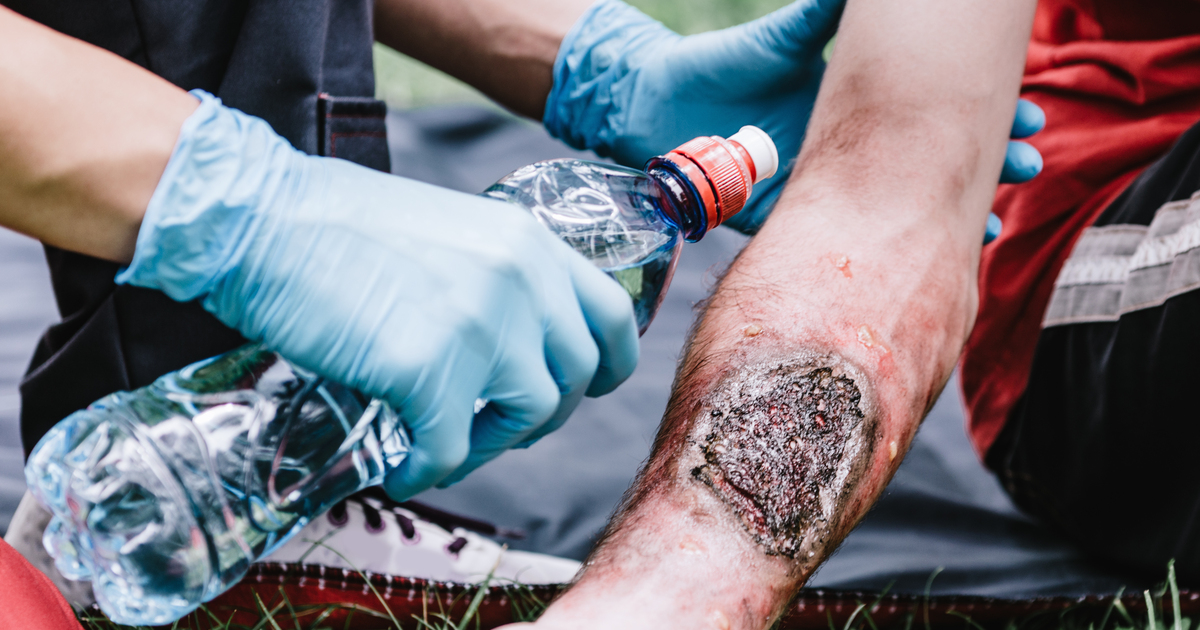
A fourth-degree burn is the most severe classification of burn injury. While first- and second-degree burns damage the top layers of skin and third-degree burns destroy the full thickness of skin, a fourth-degree burn extends beyond the skin entirely—damaging or destroying the underlying muscle, tendons, ligaments, nerves, blood vessels, and in the most extreme cases, bone.1
These injuries are immediately life-threatening and require emergency medical treatment. They cannot be managed at home, at urgent care, or at a standard emergency room—specialized burn center care is almost always required.
Understanding where fourth-degree burns fall on the spectrum helps clarify the severity:
Fourth-degree burns typically result from prolonged or extremely intense exposure to a heat or electrical source:3
Fourth-degree burns have a distinct appearance and set of clinical signs:4
If you witness a fourth-degree burn injury:
Fourth-degree burns are treated at specialized burn centers with a multidisciplinary team. Treatment phases include:5
Recovery from a fourth-degree burn is among the longest and most demanding of any injury. The process typically involves:6
Full recovery—to whatever degree is achievable—can take years. Some functional limitations may be permanent, particularly when muscle and bone are involved.
Call 911 immediately for any burn that:
Fourth-degree burns are not treatable at urgent care. Time to definitive treatment at a burn center is one of the most critical factors in survival.
A fourth-degree burn is the most severe type of burn injury. It extends through all layers of skin and destroys the underlying muscle, tendons, ligaments, and sometimes bone. These burns are life-threatening and require immediate emergency care.
Fourth-degree burns typically appear black, brown, or charred, with a dry, leathery texture. The skin may look waxy or white in some areas. You may be able to see underlying structures like tendons or bone in severe cases.
Paradoxically, fourth-degree burns are often painless at the wound site because the nerve endings have been completely destroyed. Pain may be felt in surrounding, less-severely burned tissue. The absence of pain in a severe burn is a medical warning sign, not a reassuring one.
Survival is possible, especially with immediate emergency care and treatment at a specialized burn center. Outcomes depend on the total body surface area (TBSA) affected, the location of the burn, the patient's age and health, and the speed of treatment. Burns covering a large TBSA have higher mortality.
Treatment requires hospitalization, often at a specialized burn center. It typically includes IV fluids and wound stabilization, surgical debridement (removal of dead tissue), skin grafting, and in severe cases, amputation of the affected limb. Long-term rehabilitation follows.
No. Fourth-degree burns are severe, life-threatening emergencies that require immediate transport to a hospital emergency room and transfer to a burn center. Call 911 immediately—do not drive to urgent care or wait to seek treatment.
From the clinic or your couch. Find high quality, same-day urgent care for you and your kids. Book an urgent care visit today.

Dr. Linda Halbrook is a Board-Certified Family Medicine physician with over 40 years of experience, dedicated to providing comprehensive care to patients across Texas. She retired from practice but currently serves on the Clinical Services Committee of CommonGood Medical, a non-profit organization serving the uninsured in Collin County.
Medically reviewed
View this article's sources and history, and read more about Solv's Content Mission Statement, editorial process, and editorial team.
Solv has strict sourcing guidelines and relies on peer-reviewed studies, academic research institutions, and medical associations. We avoid using tertiary references.
Solv’s team of medical writers and experts review and update our articles when new information becomes available.
Written by Solv Editorial Team
Medically reviewed by: Dr. Rob Rohatsch, MD
Medically reviewed by: Alicia Tezel, MD, FAAP, FCUCM
Medically reviewed by: Linda S. Halbrook, MD
Edited by Solv Editorial Team
Edited by Solv Editorial Team
Edited by Solv Editorial Team
From the clinic or your couch. Find high quality, same-day urgent care for you and your kids. Book an urgent care visit today.