Urgent care near me
 Key points
- Most superficial splinters can be safely removed at home with clean tweezers and a sterilized needle, followed by basic wound care.
- Always wash your hands and the area, sterilize your tools, and pull the splinter out at the same angle it went in to avoid breaking it.
- Skip home removal and seek medical care for splinters that are deeply embedded, in the eye or near the eye, in joints, under fingernails, or made of glass or metal.
- Watch for signs of infection: increasing redness, warmth, swelling, pus, red streaks, or fever — and check that your tetanus shot is up to date.
- Diabetic patients, immunocompromised patients, and anyone on blood thinners should have a clinician evaluate even minor splinters.
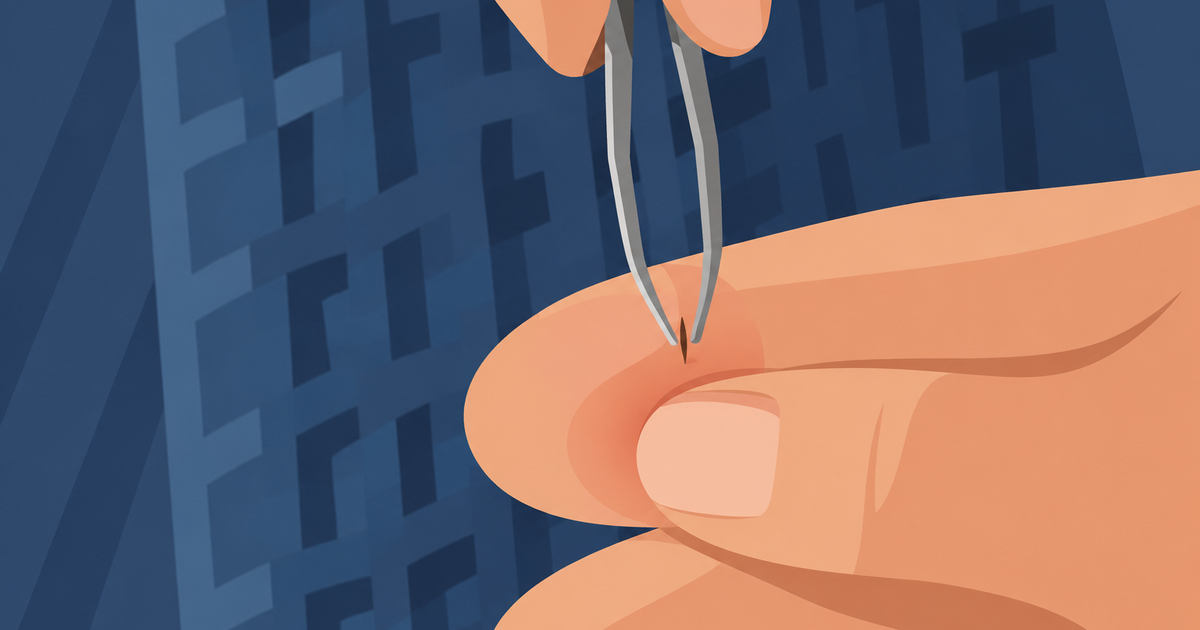
Splinters are one of the most common minor injuries — a small piece of wood, glass, metal, or plastic lodged in the skin. Most superficial splinters can be safely removed at home, but a few situations call for a clinician.1,2 Here's how to do it right and when to head to urgent care.
What you'll need to remove a splinter at home
Gather supplies before you start: soap and warm water, a clean towel, fine-tipped tweezers, a sterilized sewing needle (wipe with rubbing alcohol or hold the tip in a flame and let cool), a magnifying glass if available, antibiotic ointment, and an adhesive bandage.1
How to remove a splinter step by step
Step 1: Wash your hands and the area. Use soap and warm water to clean the skin around the splinter. Pat dry gently — vigorous rubbing can push the splinter deeper.1,2
Step 2: Examine the splinter. Use good lighting and a magnifier if needed. Note the angle the splinter entered the skin; you'll pull it out the same way.
Step 3: If a tip is exposed, use tweezers. Grasp the splinter as close to the skin as possible and pull it out at the same angle it went in. Steady, even traction works better than yanking.1
Step 4: If no tip is visible, use a sterilized needle. Gently break the skin over the splinter at the entry point, lift one end of the splinter to the surface, then use tweezers to pull it out.
Step 5: Clean and cover. Wash the area again with soap and water, apply a thin layer of antibiotic ointment, and cover with an adhesive bandage. Watch for signs of infection over the next few days.3
What about home remedies like tape, baking soda, or banana peels?
Adhesive tape can sometimes lift very superficial splinters that are barely embedded — a useful first try for kids who won't tolerate tweezers.2 Baking soda paste can cause skin to swell and may push a splinter slightly toward the surface, but it can also delay removal and increase the risk of infection if used too long. Banana peels and other folk remedies have not been clinically validated. If a splinter is not coming out easily within a day, switch to medical care.
When should you go to urgent care for a splinter?
See a clinician if any of the following apply: the splinter is deeply embedded or you cannot grasp it, it is made of glass or metal, it is under a fingernail or toenail, it is in or near the eye, it is in a joint, you have diabetes, are immunocompromised, or take blood thinners, or the wound becomes red, warm, swollen, or starts draining pus.3 Urgent care can numb the area, use small instruments or imaging to locate the foreign body, and remove it cleanly.
How do you tell if a splinter is infected?
Infection signs typically appear within a few days of a splinter that wasn't fully removed or wasn't cleaned. Watch for increasing pain, redness extending beyond the wound, warmth, swelling, pus, red streaks running from the wound, or fever.3,4 Any of these warrants a clinician visit.
Do I need a tetanus shot?
The CDC recommends a tetanus booster every 10 years and within 5 years for a dirty wound. If you cannot remember when you last had Tdap or Td, an urgent care visit is a good time to update the vaccine.4
Next steps
If a splinter is deep, embedded near a joint, or gets infected, you may end up needing minor wound care at urgent care. Our guide on how much stitches cost without insurance breaks down what you might pay without insurance.
If home removal isn't working, an urgent care visit is usually quick and straightforward. See our checklist on what to bring to urgent care so you're prepared when you arrive.
If a splinter won't come out, the area looks infected, or you're unsure about your tetanus status, find a Solv urgent care nearby and book a same-day visit online.
Frequently asked questions
Will a splinter come out on its own if left alone?
Sometimes. Very small, superficial wood splinters near the skin's surface can work their way out within a few days as the skin sheds. Glass, metal, plastic, or thorn fragments are more likely to stay embedded and should be removed.
Should I soak a splinter before trying to remove it?
Soaking the area in warm soapy water for 5 to 10 minutes can soften the skin and make tweezing easier. Avoid prolonged soaking, which can cause the splinter to swell or fragment.
Is it safe to remove a splinter from a baby or young child?
For superficial splinters in calm, cooperative children, gentle tweezing or adhesive tape can work. If your child is squirming, the splinter is deeply embedded, or it's near the eye or under a nail, take them to urgent care or pediatric care.
Can a splinter cause a serious infection?
Yes. Untreated splinters can cause cellulitis or, in rare cases, abscess formation. Splinters from outdoor settings can also raise tetanus risk if your booster is not current.
How much does urgent care typically charge to remove a splinter?
With insurance, you typically pay your urgent care copay (often $25 to $75). Self-pay rates for a foreign body removal range widely, generally $100 to $250 depending on the clinic and complexity.
Can I use rubbing alcohol or hydrogen peroxide on the wound?
Skip them. Both can damage healthy tissue and slow healing. Soap and water is the recommended cleanser, followed by a thin layer of antibiotic ointment and a clean bandage.

How we reviewed this article
Medically reviewed
View this article's sources and history, and read more about Solv's Content Mission Statement, editorial process, and editorial team.
5 sources
Solv has strict sourcing guidelines and relies on peer-reviewed studies, academic research institutions, and medical associations. We avoid using tertiary references.
- Mayo Clinic. Splinter removal: First aid.
- Cleveland Clinic. Splinter: Symptoms, removal and treatment.
- American Academy of Family Physicians. Soft tissue foreign body removal.
- Centers for Disease Control and Prevention. Tetanus: For clinicians.
- American Academy of Dermatology. Wound care: How to prevent infection.
Solv’s team of medical writers and experts review and update our articles when new information becomes available.
September 28 2024
Written by Solv Editorial Team
Medically reviewed by: Dr. Rob Rohatsch, MD
April 30 2026
Edited by Solv Editorial Team
May 02 2026
Edited by Solv Editorial Team
May 04 2026
Edited by Solv Editorial Team
May 06 2026
Edited by Solv Editorial Team
May 19 2026
Edited by Solv Editorial Team
May 23 2026
Edited by Solv Editorial Team
May 27 2026
Edited by Solv Editorial Team
June 03 2026
Edited by Solv Editorial Team