Urgent care near me
 Key points
- Most sore throats are viral and go away on their own in 5–7 days — antibiotics don't help viral sore throats.
- Strep throat accounts for 5–10% of adult sore throats and up to 30% in children. A rapid strep test is the only reliable way to confirm it.
- Signs that suggest strep: sudden severe pain, fever above 101°F, white patches on tonsils, swollen neck glands, no cough or runny nose.
- Untreated strep can cause rheumatic fever, which can damage the heart — this is why testing and treating promptly matters, especially in children.
- Urgent care clinics can run a rapid strep test in 5 minutes and prescribe antibiotics the same day if needed.

A sore throat is one of the most common reasons people visit a doctor — and also one of the most mismanaged. Most sore throats are caused by viruses and go away on their own in five to seven days. But some sore throats, particularly those caused by strep bacteria, need antibiotic treatment to prevent complications. Knowing how to tell the difference matters.
Common causes of sore throat
The vast majority of sore throats are viral — caused by the common cold, influenza, or other respiratory viruses. These don't respond to antibiotics and are managed with rest, fluids, and over-the-counter pain relief.
A smaller but clinically important subset is caused by Group A Streptococcus bacteria (strep throat). Strep throat affects roughly 5–10% of adults with sore throats and up to 30% of children.2 Untreated strep can lead to complications including rheumatic fever, which can damage the heart.
Less common causes include mononucleosis ("mono"), allergies, postnasal drip, acid reflux (GERD), and dry air.
Strep throat vs. viral sore throat: key differences
These features suggest strep throat over a viral cause:
- Sudden onset of severe throat pain
- Fever (usually above 101°F / 38.3°C)
- White patches or pus on the tonsils
- Swollen, tender lymph nodes in the neck
- No cough, runny nose, or hoarseness (these suggest a virus)
However, symptoms alone are not reliable enough to distinguish strep from viral illness. A rapid strep test or throat culture is the only definitive way to confirm strep infection.1
Home care for viral sore throats
For most sore throats, supportive care is all you need:
- Gargle with warm salt water (1/4 to 1/2 teaspoon of salt in 8 oz of water)
- Stay hydrated — cold or warm fluids both help
- Use OTC pain relievers like acetaminophen or ibuprofen
- Try throat lozenges or sprays with a numbing agent (benzocaine)
- Use a humidifier if the air in your home is dry
When to see a doctor for a sore throat
See a healthcare provider if:
- Your sore throat is severe or has lasted more than a week without improving
- You have fever, swollen glands, or white patches on your tonsils — these suggest strep
- You have difficulty swallowing or breathing
- You have been exposed to someone with confirmed strep throat
- Symptoms worsen after initially improving (may suggest secondary bacterial infection)
- You have a rash alongside the sore throat (could be scarlet fever)
Children should be seen sooner — strep is more common in kids and the risk of rheumatic fever, though rare, is a reason to test and treat promptly.3
When to visit urgent care
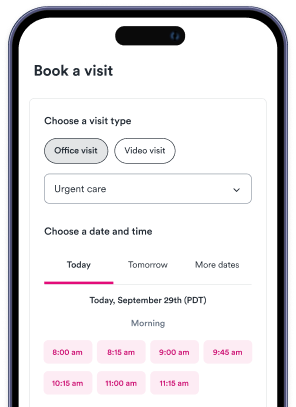
If you or your child has signs of strep throat — fever, severe throat pain, white patches, or swollen glands — visit an urgent care clinic for a same-day rapid strep test. Results take about 5 minutes. If positive, a short antibiotic course (typically amoxicillin or penicillin) will significantly shorten symptoms and prevent complications. Most urgent care clinics can test and treat strep throat without an appointment. Use Solv to find one near you.
Frequently asked questions
How do I know if my sore throat is strep or a virus?
Strep is more likely if you have sudden severe throat pain, fever above 101°F, white patches on the tonsils, and swollen neck glands — without a cough or runny nose. But the only definitive way to tell is with a rapid strep test.
Should I go to urgent care for a sore throat?
Yes, if you have signs of strep (fever, white patches, swollen glands) or if your sore throat is severe and hasn't improved after a week. Urgent care can run a rapid strep test and prescribe antibiotics if needed, usually within an hour.
Will a sore throat go away on its own?
Most sore throats caused by viruses resolve within 5–7 days with rest and supportive care. Strep throat requires antibiotics — without treatment it can last longer and carries a risk of complications like rheumatic fever.
What home remedies help a sore throat?
Gargling with warm salt water, staying hydrated, taking acetaminophen or ibuprofen for pain, using throat lozenges, and running a humidifier can all provide relief. These help manage symptoms but don't treat bacterial infections.
When is a sore throat an emergency?
Go to the ER if you have severe difficulty breathing, inability to swallow, significant drooling (in children), muffled or 'hot potato' voice, or a rapidly enlarging neck swelling. These may indicate a peritonsillar abscess or epiglottitis, both medical emergencies.
Can a sore throat be a sign of something serious?
Rarely, a sore throat can signal more serious conditions such as peritonsillar abscess, epiglottitis, or throat cancer. Warning signs include severe one-sided throat pain, drooling, muffled voice, neck stiffness, hoarseness lasting more than three weeks, unexplained weight loss, or a lump in the neck. Any of these warrant prompt medical evaluation.

How we reviewed this article
Medically reviewed
View this article's sources and history, and read more about Solv's Content Mission Statement, editorial process, and editorial team.
5 sources
Solv has strict sourcing guidelines and relies on peer-reviewed studies, academic research institutions, and medical associations. We avoid using tertiary references.
Solv’s team of medical writers and experts review and update our articles when new information becomes available.
July 08 2024
Written by Solv Editorial Team
Medically reviewed by: Dr. Rob Rohatsch, MD
April 29 2026
Edited by Solv Editorial Team
May 01 2026
Edited by Solv Editorial Team
May 03 2026
Edited by Solv Editorial Team
May 06 2026
Edited by Solv Editorial Team
May 23 2026
Edited by Solv Editorial Team
June 03 2026
Edited by Solv Editorial Team