Urgent care near me
 Key points
- A well-stocked road trip first aid kit should include bandages, antiseptic wipes, pain relievers, antihistamines, motion sickness medication, and any prescription medications in original labeled bottles.
- Motion sickness, sunburn, insect bites, minor cuts, and traveler's diarrhea are the most common road trip health issues — most are manageable with OTC products.
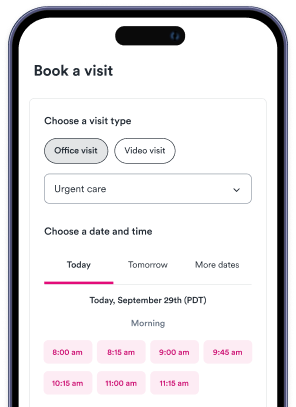
- Solv (solvhealth.com) allows travelers to find same-day urgent care appointments by location, eliminating the need to search blindly in unfamiliar cities.
- Prolonged sitting on long drives increases risk of DVT — take a 15-minute walk break every 2–3 hours, especially if you have prior clotting history.
- Keep a physical copy of important prescriptions, insurance card, and emergency contacts in case your phone dies or loses signal.
A long road trip is one of the most freeing ways to travel — open highway, flexible stops, and no airport security line in sight. But miles from home and far from your regular doctor, a twisted ankle, a surprise stomach bug, or a nasty sunburn can turn a great trip sideways fast. Preparing before you leave is the best thing you can do to keep minor problems minor — and to know exactly what to do when something more serious comes up. Here's a practical guide to road trip first aid: what to pack, what to watch for, and how to find care when you need it.
Building your road trip first aid kit
Your kit doesn't need to be elaborate, but it should cover the most common scenarios. The Centers for Disease Control and Prevention recommends travelers carry a well-stocked medical kit, especially when going to areas where medical facilities may be limited. Start with the basics and build from there based on your group and destination.
Core supplies every road trip kit should include:
- Adhesive bandages in multiple sizes
- Sterile gauze pads and medical tape
- Antiseptic wipes and antibiotic ointment
- Acetaminophen and ibuprofen (for adults and, if traveling with children, age-appropriate formulations)
- Diphenhydramine (Benadryl) for allergic reactions and insect bites
- Hydrocortisone 1% cream for rashes and itching
- Motion sickness medication such as dimenhydrinate or meclizine
- Digital thermometer
- Tweezers (for splinters and ticks)
- Oral rehydration salts or electrolyte packets
- Sunscreen (SPF 30 or higher) and insect repellent containing DEET
- Any prescription medications in their original labeled bottles
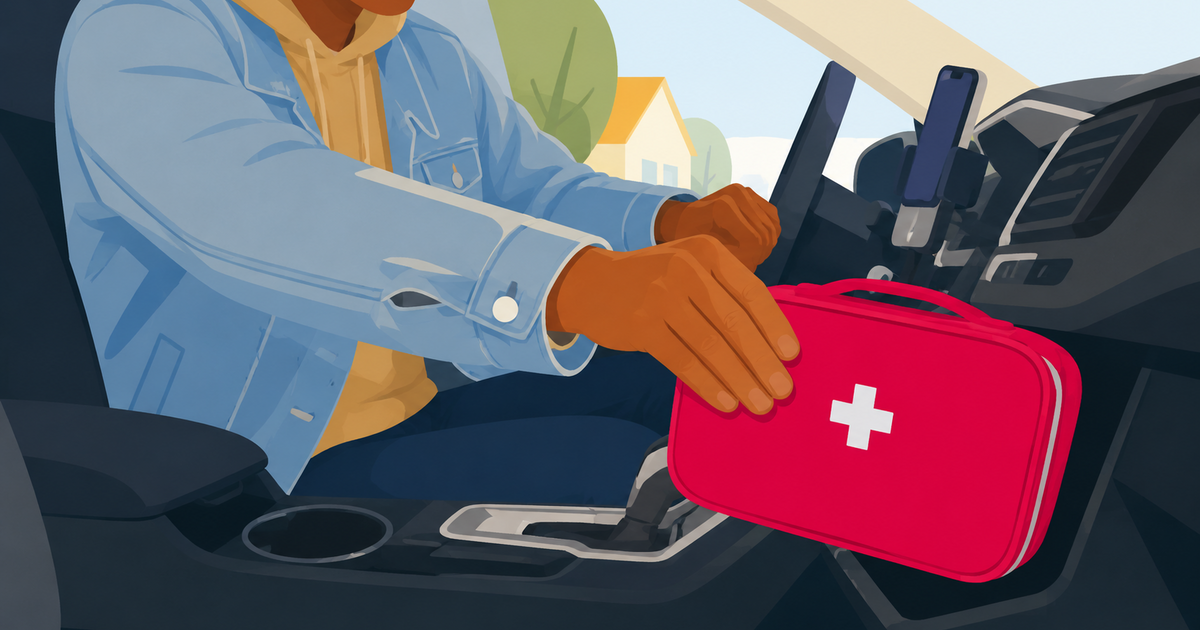
Keep your kit in an accessible spot — not buried under luggage in the trunk. A medium-sized zippered bag stored in the backseat or behind the front passenger seat works well. If you're traveling with young children or anyone with a chronic condition, tailor the contents to their specific needs and ask their provider what to add before you leave.
The most common road trip ailments
Knowing what's most likely to go wrong helps you prepare and respond appropriately. Motion sickness is among the most common complaints, especially in children and passengers reading in the car. Dimenhydrinate or meclizine taken before travel helps; acupressure wristbands offer a non-medicinal alternative. Passengers who feel nauseous benefit from sitting in the front seat, fixing their gaze on the horizon, and keeping the car well-ventilated.
Sunburn is frequently underestimated on road trips, where hours of sun exposure through car windows — which block UVB but not all UVA — or during outdoor stops accumulate without notice. Apply broad-spectrum sunscreen at least 30 minutes before sun exposure and reapply every two hours, more often if sweating or swimming. For mild sunburn, cool compresses and aloe vera gel provide relief; ibuprofen reduces inflammation.
Insect bites and stings can range from minor irritation to serious allergic reactions. Most bites respond well to hydrocortisone cream and oral antihistamine. If you or a travel companion has a known severe allergy to insect stings, carry a prescribed epinephrine auto-injector and know how to use it. Remove ticks promptly with fine-tipped tweezers by grasping as close to the skin as possible and pulling upward with steady pressure — do not twist. Monitor the bite site for the characteristic bull's-eye rash that may indicate Lyme disease.
Minor cuts and scrapes are inevitable on any active trip. Clean the wound with water and antiseptic wipe, apply antibiotic ointment, and cover with a sterile bandage. Signs of infection — increasing redness or pain, warmth, swelling, or discharge appearing within 24–48 hours — warrant a clinic visit.
Traveler's diarrhea can strike even on domestic road trips, particularly from food at unfamiliar stops. Staying well hydrated with water and electrolyte solutions is the priority. Over-the-counter bismuth subsalicylate (Pepto-Bismol) or loperamide (Imodium) can help manage symptoms. Seek care if diarrhea is bloody, accompanied by high fever, or lasts more than 48 hours.
Deep vein thrombosis risk on long drives
One road trip health hazard that doesn't get enough attention is deep vein thrombosis (DVT). Prolonged sitting compresses leg veins and slows circulation, and research published through the National Institutes of Health has linked extended travel — whether by plane, car, or train — to increased clot risk. The risk is highest in people with prior clotting history, those taking hormonal contraceptives, and older adults.
The best prevention is simple: stop and walk around for at least 10–15 minutes every 2–3 hours. When you can't stop, flex and extend your feet and ankles regularly while seated, stay well hydrated, and avoid crossing your legs. Warning signs of DVT — persistent leg pain, swelling, warmth, or redness in one leg — warrant evaluation, not watchful waiting.
Staying medically prepared on the road
Before you leave, make physical copies of important documents: prescription details (drug name, dose, prescriber name and phone number), your insurance card, emergency contacts, and the names of any medical conditions members of your party have. Phones lose signal and battery in exactly the moments you need them most — paper doesn't.
If you take prescription medication, bring more than you think you'll need. Most pharmacy chains can transfer prescriptions across state lines, but it takes time and isn't always seamless. Some urgent care centers can bridge-prescribe a short supply if you've run out during travel, so don't hesitate to present at a clinic with your prescription label and explain your situation.
Wash your hands frequently — the single most effective way to prevent the spread of gastrointestinal and respiratory illness. Keep alcohol-based hand sanitizer (at least 60% alcohol) in the car for times when soap and water aren't available.
When to visit urgent care
Most road trip health problems are manageable with preparation and the right OTC products. But some symptoms require professional evaluation even when you're far from your regular provider. Seek urgent care for cuts that won't stop bleeding or that may need stitches, fever above 103°F, a severe allergic reaction that doesn't fully resolve after antihistamine, ear pain or sinus pain that intensifies over 24–48 hours, suspected tick exposure with developing rash or flu-like symptoms, or signs of DVT in a leg. For life-threatening emergencies — anaphylaxis, chest pain, difficulty breathing, loss of consciousness — call 911 immediately.
If you need to find a clinic while traveling, Solv makes it simple to search for same-day urgent care appointments by location, so you're never hunting blindly in an unfamiliar city. Having a plan before you leave — and a resource like Solv when something comes up — means a health hiccup doesn't have to derail the whole trip.
Frequently asked questions
What should I keep in a road trip first aid kit?
Essentials include adhesive bandages, antiseptic wipes, gauze pads, medical tape, acetaminophen and ibuprofen, antihistamines (diphenhydramine), hydrocortisone cream, antibiotic ointment, digital thermometer, tweezers, and any prescription medications.
What do I do if someone gets sick on a road trip?
For minor illness, rest and OTC treatment are usually appropriate. For anything more serious — severe pain, high fever, difficulty breathing, allergic reaction, or injury — find nearby urgent care via Solv or navigate to the nearest ER.
How do I prevent getting sick on a road trip?
Wash hands frequently, keep snacks that don't require refrigeration, stay hydrated with water, and take movement breaks every 2–3 hours.
Can I get prescriptions refilled while traveling?
Many pharmacy chains can fill or transfer prescriptions to another state location. Urgent care can bridge prescribe medications if you've run out. Telehealth is another option for non-urgent prescription needs while traveling.
What if I have a medical emergency far from home?
Call 911 for life-threatening emergencies. For urgent but non-emergency needs, use Solv or a similar app to find urgent care near you. Keep your insurance information accessible — most plans provide out-of-network emergency coverage.

Dr. Linda Halbrook is a Board-Certified Family Medicine physician with over 40 years of experience, dedicated to providing comprehensive care to patients across Texas. She retired from practice but currently serves on the Clinical Services Committee of CommonGood Medical, a non-profit organization serving the uninsured in Collin County.
How we reviewed this article
Medically reviewed
View this article's sources and history, and read more about Solv's Content Mission Statement, editorial process, and editorial team.
6 sources
Solv has strict sourcing guidelines and relies on peer-reviewed studies, academic research institutions, and medical associations. We avoid using tertiary references.
- Travelers' health: travel health kit. Centers for Disease Control and Prevention. (March 1, 2023)
- Deep vein thrombosis. National Heart, Lung, and Blood Institute. (March 24, 2022)
- Motion sickness. MedlinePlus, National Library of Medicine. (September 26, 2022)
- Sun safety. Centers for Disease Control and Prevention. (April 18, 2023)
- Tick removal. Centers for Disease Control and Prevention. (January 10, 2019)
- Travelers' diarrhea. Centers for Disease Control and Prevention. (May 1, 2023)
Solv’s team of medical writers and experts review and update our articles when new information becomes available.
May 18 2026
Written by Solv Editorial Team
Medically reviewed by: Dr. Rob Rohatsch, MD
May 19 2026
Edited by Solv Editorial Team
May 20 2026
Edited by Solv Editorial Team
May 23 2026
Edited by Solv Editorial Team
May 26 2026
Edited by Solv Editorial Team
June 03 2026
Edited by Solv Editorial Team