Urgent care near me
Sane-day doctor visits
Feel better faster. Get care today.
From the clinic or your couch. Find high quality, same-day urgent care for you and your kids. Book an urgent care visit today.
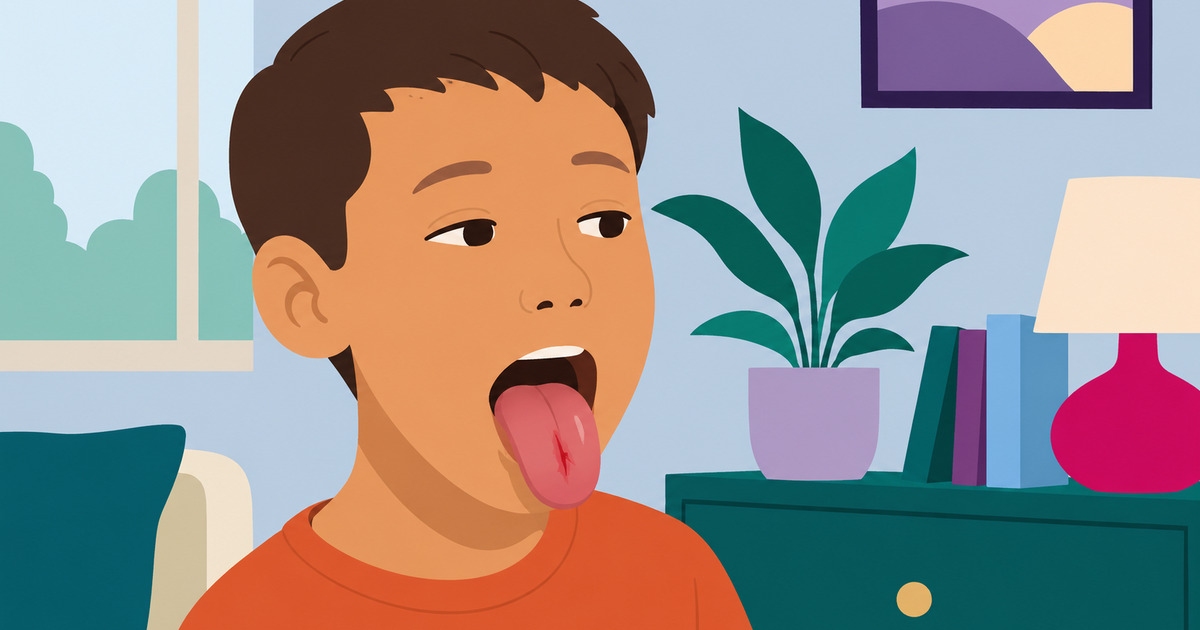
Most cuts on the tongue heal on their own within a few days without stitches. The tongue's rich blood supply makes initial bleeding look dramatic but also means the wound usually closes and heals faster than skin elsewhere on the body.1 Stop the bleeding with 5 to 10 minutes of firm pressure, rinse with saltwater, and eat soft foods until the cut closes. Go to urgent care if the cut is gaping, longer than about 2 cm, has a loose flap, or is on the tongue tip; go to the ER for uncontrolled bleeding, trouble breathing, a severed piece of tongue, or any high-force injury that may have caused other damage.2
Most tongue bleeding looks alarming because the tongue has a dense network of blood vessels, but it usually stops with steady pressure:
Rinse your mouth gently with cool water to clear blood and debris. Wrap a piece of sterile gauze or a clean cloth around the area and press firmly between the gauze and the roof of your mouth or the tongue's surface. Hold steady, continuous pressure for at least 5 to 10 minutes — resist the urge to peek. Sucking on an ice cube or popsicle after bleeding slows can ease pain and constrict blood vessels. If bleeding continues at full speed after 15 minutes of pressure, go to urgent care or the ER.
Most cuts can heal without stitches. Clinicians generally recommend repair when:1,3
The cut is on the tip of the tongue and gapes when the tongue is at rest. The cut is longer than 2 cm (about 3/4 inch) on the top or side and gapes open. There is a loose flap of tissue that could catch on teeth or food. The wound splits the tongue's edge. The cut is deep enough to involve muscle. Smaller cuts and cuts that close on their own when the tongue is relaxed usually heal well without sutures, even though they may look bigger when the tongue moves.1
If repair is needed, a clinician will numb the area with a local anesthetic and use absorbable sutures (typically 3-0 or 4-0 chromic catgut or Vicryl) that dissolve on their own over 1 to 2 weeks.4 Children may need sedation to stay still during the repair. Antibiotics aren't routinely required for clean tongue cuts but may be prescribed for bites, deep wounds, or wounds with foreign material.
Most cuts heal well with simple care:
Rinse gently with a saltwater solution (1/2 teaspoon salt in 8 oz warm water) 3 to 4 times a day, especially after meals. Stick with soft, cool foods — yogurt, smoothies, scrambled eggs, mashed potatoes, ice cream — for the first day or two. Avoid spicy, acidic, salty, and crunchy foods that sting or could reopen the wound. Skip alcohol and tobacco while healing. Take acetaminophen for pain; ibuprofen can be used after the first 24 hours once bleeding has stopped (it has mild blood-thinning effects). Keep the tongue still as much as possible — talking and chewing both stress the wound.
Small cuts typically heal in 3 to 7 days, and even larger cuts usually close within 2 weeks. The tongue is one of the fastest-healing tissues in the body because its cells turn over quickly and its blood supply is excellent.1 A small white or yellow film over the wound during healing is normal — that's a normal inflammatory layer, not pus.
Go to urgent care for a cut that has stopped bleeding but is gaping, has a loose flap, is longer than 2 cm, or is on the tongue's tip. Urgent care can numb, clean, and suture most tongue cuts. Go to the emergency room instead for bleeding that won't stop after 15 minutes of firm pressure, trouble breathing or swallowing, swelling that's expanding into the throat, a severed piece of tongue (bring it on ice if you can), or any tongue injury from a high-force event — a major fall, sports collision, motor vehicle crash, or fight — because the airway, jaw, neck, or teeth may also be hurt.2
Tongue infections are uncommon thanks to the antibacterial properties of saliva, but they can happen.5 Watch for increasing pain after 48 hours, a fever, increasing redness around the cut, foul taste or odor in your mouth, pus, swelling of the floor of the mouth, or trouble swallowing. If any of these develop, get evaluated — antibiotics may be needed, and infections under the tongue can spread quickly.
If you have a tongue cut that has stopped bleeding but you're not sure it's small enough to heal on its own, book a same-day visit through Solv. The clinician can numb the area for a careful look and either reassure you or close the wound — usually in under 30 minutes.
Usually yes. Even cuts that needed stitches typically heal with very little visible scarring because the tongue's surface regenerates quickly. Deep cuts that split the tongue's edge can leave a small notch if not repaired, which is one reason clinicians suture cuts on the tongue tip even when they aren't very long.
Skip alcohol-based mouthwashes for the first few days — they sting and can delay healing. A warm saltwater rinse 3 to 4 times a day is the standard recommendation. Chlorhexidine mouthwash is sometimes prescribed for larger or repaired wounds but isn't needed for most small cuts.
Reassure them, rinse the mouth with cool water, and apply firm pressure with gauze for 5 to 10 minutes. Most pediatric tongue bites heal without stitches. Take your child to urgent care or the ER if bleeding doesn't stop after 15 minutes of pressure, if a piece of tongue is dangling or missing, if the cut looks deep or gapes wide, or if the injury was from a fall or collision that could have hurt the jaw or teeth too.
Temporarily, yes — swelling and pain make talking and tasting uncomfortable for a few days. Permanent changes are uncommon. If a numb area on the tongue, persistent altered taste, or speech changes don't resolve within two weeks of a healed wound, ask your clinician about a referral to oral surgery or ENT.
Probably not. Tetanus is unlikely in a clean wound created by your own teeth. Update your tetanus booster if it's been more than 10 years since your last one, or more than 5 years if the wound was caused by a contaminated object (a fall onto something dirty, a foreign object, or an animal bite).
Most cuts only need saltwater rinses and pain relief. Topical numbing gels like Orajel can briefly ease pain before eating, but use them sparingly. Hyaluronic acid oral gels (such as Gengigel) have some evidence for soothing mucosal wounds. Skip whitening rinses, alcohol-based mouthwash, and abrasive lozenges until the cut has healed.
From the clinic or your couch. Find high quality, same-day urgent care for you and your kids. Book an urgent care visit today.

Medically reviewed
View this article's sources and history, and read more about Solv's Content Mission Statement, editorial process, and editorial team.
Solv has strict sourcing guidelines and relies on peer-reviewed studies, academic research institutions, and medical associations. We avoid using tertiary references.
Solv’s team of medical writers and experts review and update our articles when new information becomes available.
Written by Solv Editorial Team
Medically reviewed by: Dr. Rob Rohatsch, MD
Edited by Solv Editorial Team
Edited by Solv Editorial Team
Edited by Solv Editorial Team
Edited by Solv Editorial Team
Edited by Solv Editorial Team
From the clinic or your couch. Find high quality, same-day urgent care for you and your kids. Book an urgent care visit today.