Urgent care near me
Sane-day doctor visits
Feel better faster. Get care today.
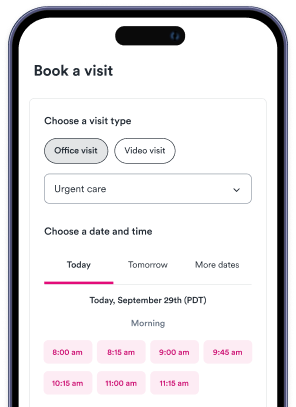
From the clinic or your couch. Find high quality, same-day urgent care for you and your kids. Book an urgent care visit today.
Urgent care visits without insurance are often necessary but unpredictable in cost. Prices vary depending on what services are needed, where you live, and which clinic you visit. Knowing typical price ranges before you go helps you plan, ask the right questions, and avoid bill shock.
If you have coverage but are unsure what you'll owe, read our guide on whether urgent care is covered by insurance — including how in-network status, deductibles, and copays affect your bill.
The average self-pay urgent care visit costs between $150 and $280, covering the base provider evaluation.1 Most standard visits for conditions like ear infections, UTIs, sore throats, and minor injuries fall within this range.
When diagnostic tests or procedures are added, costs rise quickly:
Rapid tests are billed separately from the base evaluation fee. Common add-on costs include:2
X-rays for fractures, sprains, or chest evaluations typically add $100–$250 to a visit. Some clinics bundle imaging into a flat fee; others bill it separately. Ask upfront.2
Minor laceration repair runs $150–$250. Sutures add more depending on the number of stitches and complexity. For a detailed breakdown, see our guide on how much stitches cost without insurance.2
If a blood or urine sample is sent to an outside laboratory such as Quest Diagnostics or LabCorp, that lab bills separately — and the bill may arrive days or weeks after your visit. This is one of the most common sources of unexpected costs for uninsured patients.
Geography is a major pricing factor. Urban and high cost-of-living areas charge substantially more than rural or suburban clinics for identical services:2
Franchise-based urgent care chains often have more standardized pricing than independent clinics, but prices still vary by market.
Most urgent care centers offer 10–30% discounts for patients who pay at the time of service rather than being billed later. Ask at the front desk before you register: "Do you offer a self-pay or cash-pay discount?" Many clinics do not advertise this proactively.1
After your visit, request a bill that lists every charge individually. Review it carefully — billing errors are common — and dispute any charges that don't match services you received.
If the balance is larger than expected, most urgent care centers will work out a payment plan rather than send the bill to collections. Ask before it becomes overdue.
For straightforward concerns that don't require a physical exam — such as a mild UTI, prescription refill question, or cold symptoms — telehealth visits typically cost $50–$100. Federally Qualified Health Centers (FQHCs) offer sliding-scale fees based on income and can provide significant savings for uninsured patients.3
The cost difference is substantial. An uninsured emergency room visit averages $1,000–$2,500 for common conditions, and complex cases can run far higher.2 Urgent care is the appropriate and significantly more affordable choice for non-life-threatening conditions. Reserve the ER for chest pain, difficulty breathing, severe bleeding, stroke symptoms, or anything potentially life-threatening. For guidance on which to choose, see our comparison of urgent care vs. the ER.
The average self-pay urgent care visit costs between $150 and $280 for a standard evaluation. Costs increase when diagnostic tests, X-rays, or procedures such as wound care are added, pushing totals to $300–$500 or more.
Yes. Most urgent care centers offer 10–30% self-pay or cash-pay discounts for patients who pay at the time of service. Ask at the front desk before registering — these discounts are often not advertised.
Diagnostic tests (rapid strep, flu, COVID, urinalysis), X-rays, and wound care are the most common cost drivers beyond the base visit fee. External lab work billed separately is another frequent surprise for uninsured patients.
Yes — significantly. An uninsured ER visit averages $1,000–$2,500 for common conditions. Urgent care is the appropriate, lower-cost choice for non-life-threatening conditions such as infections, minor injuries, and illnesses.
Yes. You can request an itemized bill, dispute any errors, and ask for a payment plan. Most clinics will reduce or spread out a balance rather than send it to collections — ask before it becomes overdue.
Telehealth visits typically cost $50–$100 for conditions that don't require a physical exam. Federally Qualified Health Centers (FQHCs) offer sliding-scale fees based on income, making them one of the most affordable options for uninsured patients.
From the clinic or your couch. Find high quality, same-day urgent care for you and your kids. Book an urgent care visit today.

Medically reviewed
View this article's sources and history, and read more about Solv's Content Mission Statement, editorial process, and editorial team.
Solv has strict sourcing guidelines and relies on peer-reviewed studies, academic research institutions, and medical associations. We avoid using tertiary references.
Solv’s team of medical writers and experts review and update our articles when new information becomes available.
Written by Solv Editorial Team
Medically reviewed by: Dr. Rob Rohatsch, MD
Edited by Solv Editorial Team
Edited by Solv Editorial Team
Edited by Solv Editorial Team
Edited by Solv Editorial Team
Edited by Solv Editorial Team
Edited by Solv Editorial Team
Edited by Solv Editorial Team
Edited by Solv Editorial Team
Edited by Solv Editorial Team
From the clinic or your couch. Find high quality, same-day urgent care for you and your kids. Book an urgent care visit today.