Urgent care near me
Sane-day doctor visits
Feel better faster. Get care today.
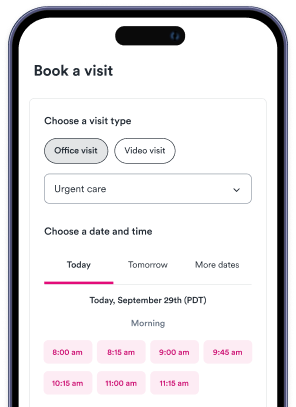
From the clinic or your couch. Find high quality, same-day urgent care for you and your kids. Book an urgent care visit today.
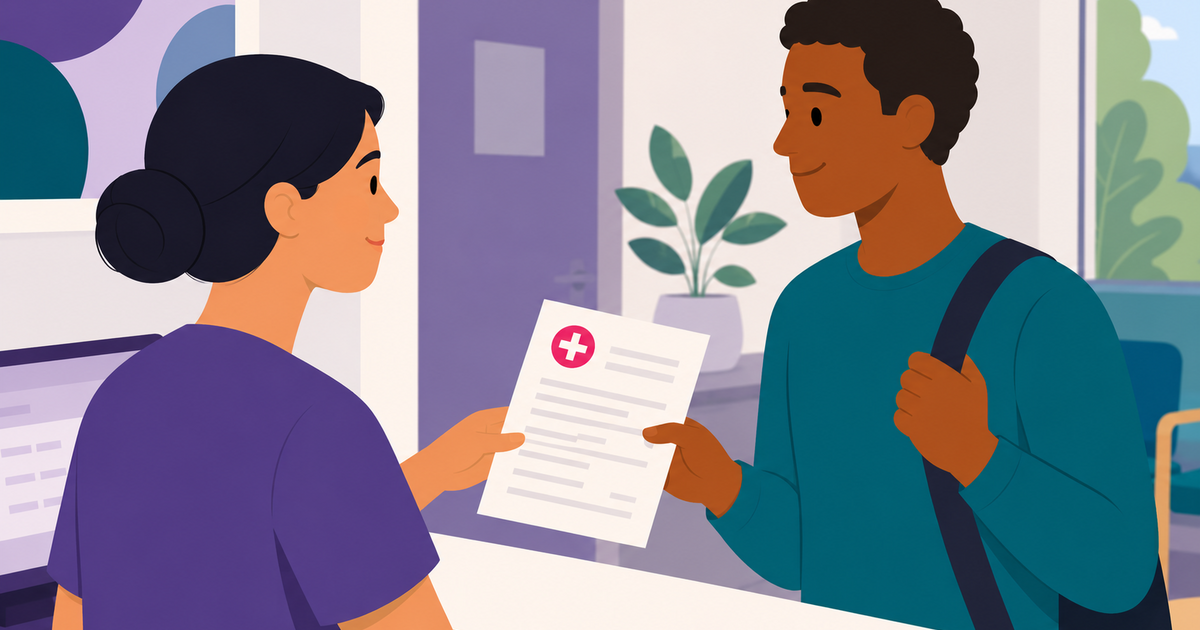
Yes, urgent care clinics can write a doctor's note—also called a sick note or work excuse—documenting your illness, injury, or medical appointment. Most clinics provide notes the same day, often during a walk-in visit. This article covers when you may need a note, exactly how to get one from urgent care, what to bring, and whether a virtual (telemedicine) note will be accepted by your employer.
Employer policies on doctor's notes vary widely. Under the Family and Medical Leave Act (FMLA), employers may require employees to provide medical certification from a licensed health care provider before approving leave for a serious health condition, using standardized Department of Labor forms.1 Outside of FMLA, employers may require documentation for routine sick leave as long as the policy applies uniformly to all employees—the EEOC has clarified that requiring documentation inconsistently may constitute disability discrimination under the ADA.2,3 Common situations requiring a note include:
Check with your HR department or supervisor to understand your employer's specific requirements before your visit—some have a required note template.
Any condition that keeps you out of work for more than one to two days is a reasonable candidate for documentation. The most common reasons urgent care patients request work notes include:
For mental health conditions or longer-term disability, you may need documentation from a specialist or primary care provider rather than urgent care. The EEOC notes that employers may not request more medical information than is necessary to substantiate the need for leave—documentation of restrictions is sufficient; full records are not required.2 Call ahead to confirm the clinic can provide the type of note your employer needs.
Getting a note from urgent care is typically the same-day, same-visit process. According to the American Academy of Family Physicians, effective return-to-work documentation requires the physician to understand the patient's job demands and document specific workplace restrictions clearly.4 Follow these steps:
Bring the following to make your visit efficient and ensure the note includes everything your employer needs:
Clear communication ensures the note accurately reflects your condition and protects you with your employer:
Once you have the note, submit it promptly. Delayed submission can complicate your leave status:
If your employer requires a note and you don't provide one, consequences can range from the absence being marked unexcused to disciplinary action or termination—depending on company policy and applicable state employment law. The EEOC clarifies that employers must apply documentation requirements consistently; if a policy exists, it must cover all employees equally.3 If you're uncertain, check your employee handbook or ask HR before your absence.
Yes, in most cases. The American Medical Association affirms that physicians providing telemedicine consultations can conduct diagnostic evaluations and prescribe therapy—including issuing documentation—provided they are licensed in the state where the patient receives care.5
However, two factors affect whether a virtual note will be accepted:
If your employer doesn't accept a virtual note, your nearest urgent care walk-in clinic is your fastest alternative for same-day in-person documentation.
Most urgent care clinics can evaluate your condition and issue a work note in a single same-day visit. Solv makes it easy to find urgent care clinics near you that accept your insurance, see current wait times, and book online.
Yes. Most urgent care clinics can provide a work excuse note documenting your illness, injury, or appointment. Call ahead to confirm the clinic offers notes and can accommodate your employer's required format.
Generally, no. Providers can only certify that they evaluated you on the date of your visit — they cannot attest to symptoms on days they did not examine you. Some providers will note that symptoms began on a reported date, but this is a clinical statement, not a certification of absence. If you need documentation for days before your visit, ask your employer whether a personal statement combined with a dated medical note is acceptable.
There is no universal legal standard, but most employers expect a note that includes: the provider's name and credentials, the clinic's contact information, the date of your visit, a statement that you were seen for a medical reason, and the dates you were recommended to miss work or return to normal duties. Avoid notes that include specific diagnoses unless required — many employers only need an absence excuse, not your medical history.
Generally, no. Under HIPAA and most state employment laws, you are not required to tell your employer your specific diagnosis. A doctor's note confirming you were seen and are unable to work is typically sufficient. Some employers may ask for more detail, but you have the right to keep your diagnosis private. Review your employee handbook and, if needed, check with HR about exactly what documentation is required for your situation.
An urgent care note alone is generally not sufficient for FMLA leave. FMLA requires a specific certification form — completed by a treating healthcare provider — detailing the nature of the condition, expected duration, and functional limitations. While urgent care can provide initial documentation, FMLA certification typically needs to be completed by a provider with an ongoing treatment relationship. Ask your HR department for the correct FMLA paperwork before your visit.
Typically the same visit. Most clinics provide a printed or portal-accessible note on the day of your visit. Ask at check-in to ensure you don't leave without it, or confirm how the note will be delivered (print, portal, fax).
If you fail to obtain a doctor's note when your employer requires one, you may face disciplinary action or even termination from your job. It's important to understand your specific employer's policies, which you can usually find out by speaking to your supervisor or human resources.
Obtaining a doctor's note is important because it verifies the legitimacy of your absence and provides your employer with an estimated timeframe for your recovery. It can also protect you from potential disciplinary action or termination if your employer requires a doctor's note for absences due to illness or injury.
From the clinic or your couch. Find high quality, same-day urgent care for you and your kids. Book an urgent care visit today.

Medically reviewed
View this article's sources and history, and read more about Solv's Content Mission Statement, editorial process, and editorial team.
Solv has strict sourcing guidelines and relies on peer-reviewed studies, academic research institutions, and medical associations. We avoid using tertiary references.
Solv’s team of medical writers and experts review and update our articles when new information becomes available.
Written by Solv Editorial Team
Medically reviewed by: Dr. Rob Rohatsch, MD
Edited by Solv Editorial Team
Edited by Solv Editorial Team
Edited by Solv Editorial Team
Edited by Solv Editorial Team
Edited by Solv Editorial Team
Edited by Solv Editorial Team
Edited by Solv Editorial Team
Edited by Solv Editorial Team
Edited by Solv Editorial Team
From the clinic or your couch. Find high quality, same-day urgent care for you and your kids. Book an urgent care visit today.