Urgent care near me
Sane-day doctor visits
Feel better faster. Get care today.
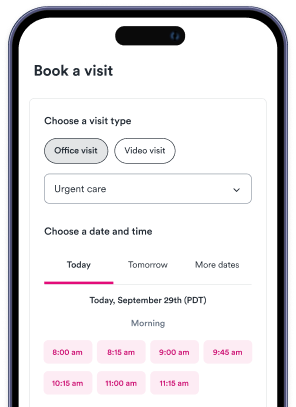
From the clinic or your couch. Find high quality, same-day urgent care for you and your kids. Book an urgent care visit today.

A retail clinic is a small walk-in healthcare location inside a pharmacy, supermarket, or big-box store that treats minor illnesses, gives vaccines, and handles routine preventive services like physicals or screenings. Care is typically delivered by a nurse practitioner or physician assistant, with no appointment needed and visits that usually take 15 to 30 minutes.1
Retail clinics — sometimes called convenience clinics, in-store clinics, or "MinuteClinics" — operate inside chain retailers such as CVS, Walgreens, Walmart, Target, and certain grocery chains. The Centers for Disease Control and Prevention (CDC) tracks them alongside urgent care as one of the main "convenience care" channels patients use outside of a primary care office.1
Most clinics occupy a few hundred square feet, are staffed by one or two clinicians, and treat a narrow list of low-acuity conditions. Hours typically extend into evenings and weekends, which is one reason younger adults without an established primary care provider use them most often.2
Retail clinics focus on a relatively short list of complaints. Research shows that roughly 10 conditions account for more than 90% of retail clinic visits.3 Common services include:
Some retail chains have expanded into chronic disease management for conditions such as hypertension, high cholesterol, and diabetes, but that scope varies significantly by brand and by state law.4
Retail clinics and urgent care centers are both walk-in options, but the scope of care differs. Urgent care centers are generally larger, have on-site physicians, and offer X-rays, IV fluids, and laceration repair — services retail clinics do not provide.5
A useful rule of thumb: if your problem is minor and self-limiting, a retail clinic is often the cheapest, fastest option. If you need imaging, stitches, fluids, or evaluation of moderate pain or injury, urgent care is the right level of care. For chest pain, severe bleeding, stroke symptoms, or any life-threatening concern, go directly to the emergency department or call 911.5
Retail clinics are generally the lowest-cost in-person care option for minor problems. Most accept commercial insurance, Medicare, and many Medicaid plans, and copays are typically the same as or lower than a primary care visit. For self-pay patients, a basic visit usually runs less than a comparable urgent care visit and far less than the emergency room.3
Costs vary by chain, location, services rendered, and whether labs or vaccines are added on. Always confirm coverage with your insurer and ask the clinic for an upfront price if you're paying out of pocket.
The CDC found that in 2019, about 29% of U.S. adults had at least one urgent care or retail health clinic visit in the prior 12 months, with women using them more often than men.1 Retail clinic users skew younger and are more likely to lack a primary care provider — about a third of patients say they have no usual source of care.2
Among people who use retail clinics as their usual source of care, the most common reasons are convenience, lower cost, and shorter wait times compared with traditional primary care offices.2
Studies comparing retail clinics, primary care offices, urgent care, and emergency departments for the same minor conditions have generally found similar quality of care for the conditions retail clinics are designed to handle, at meaningfully lower cost.3 Clinicians follow standardized clinical protocols and refer patients to higher levels of care when symptoms fall outside their scope.
That said, retail clinics are not a substitute for ongoing primary care. Research has shown that frequent retail clinic use can fragment care, especially for patients who don't loop their primary care doctor into the visit.6
A retail clinic is a good fit when you have a minor, self-limiting problem, your primary care provider isn't available, and you don't need imaging or stitches. Choose urgent care when symptoms are more severe, you may need an X-ray or IV fluids, or you have a moderate injury. Choose your primary care provider when you need ongoing management of a chronic condition, complex symptoms that need a longer visit, or care that benefits from someone who knows your history.
If you need same-day care for a minor issue and want the fastest, most affordable option, check Solv to find and book a retail clinic, walk-in clinic, or urgent care near you. You can compare prices, reviews, and availability in real time, and reserve a time slot so you spend less time in the waiting room.
Most retail clinics accept commercial insurance, Medicare, and many Medicaid plans. Coverage and copays vary by chain and plan, so it's worth calling ahead or checking your insurer's site to confirm before you go. Self-pay rates are usually posted at the location or available by phone.
Yes. Nurse practitioners and physician assistants at retail clinics can prescribe most medications used to treat the conditions they handle, like antibiotics for strep or a UTI, antivirals for the flu, or short courses of inhaled medications. Controlled substances are typically not prescribed at retail clinics.
Most do. Common offerings include flu, COVID-19, shingles, Tdap, and pneumococcal vaccines, along with school, sports, employment, and camp physicals. Travel vaccines and certain childhood immunizations may not be available at every chain.
Most chains will share a visit summary with your primary care provider if you give them the name and contact information at check-in. This matters: when retail visits aren't shared, ongoing care can become fragmented, particularly for chronic conditions.
Many retail clinics treat children, but minimum age policies vary by chain — some see patients as young as 12 or 18 months, while others require a child to be 2 or older. Call ahead or check the chain's website for the specific age policy at your local clinic.
Bring a photo ID, your insurance card, a list of current medications, and your primary care provider's name if you'd like a visit summary sent. Arrive ready to describe symptoms, when they started, and any treatments you've already tried — this speeds up the visit considerably.
From the clinic or your couch. Find high quality, same-day urgent care for you and your kids. Book an urgent care visit today.

Medically reviewed
View this article's sources and history, and read more about Solv's Content Mission Statement, editorial process, and editorial team.
Solv has strict sourcing guidelines and relies on peer-reviewed studies, academic research institutions, and medical associations. We avoid using tertiary references.
Solv’s team of medical writers and experts review and update our articles when new information becomes available.
Written by Solv Editorial Team
Medically reviewed by: Dr. Rob Rohatsch, MD
Edited by Solv Editorial Team
Edited by Solv Editorial Team
Edited by Solv Editorial Team
Edited by Solv Editorial Team
Edited by Solv Editorial Team
From the clinic or your couch. Find high quality, same-day urgent care for you and your kids. Book an urgent care visit today.