Urgent care near me
On-demand lab testing
Ensure your health. Get tested today.
Convenient lab testing at your fingertips at more than 5,000 locations nationally. Consult with a doctor, or get tested on your own.
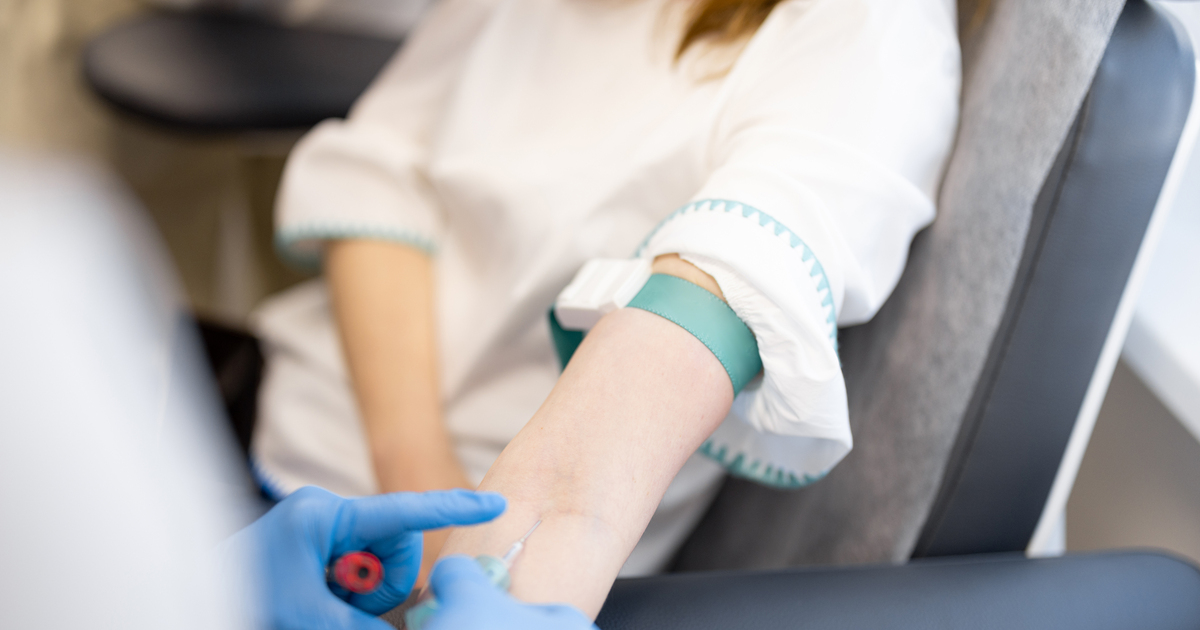
A creatinine blood test measures the amount of creatinine — a waste product from normal muscle breakdown — in your bloodstream. Healthy kidneys filter creatinine out of the blood and into urine, so the level in your blood is one of the most common indicators of how well your kidneys are working.1
Your body makes creatine to fuel muscle activity. As muscles use that energy, they break creatine down into a waste product called creatinine, which travels through the blood to the kidneys. The kidneys filter creatinine out and excrete it in urine. Because production is relatively steady from day to day, blood creatinine levels are a useful — though imperfect — way to estimate kidney filtration.2
The serum creatinine test reports the concentration of creatinine in a small blood sample, usually drawn from a vein in your arm. Most lab panels report creatinine alongside an estimated glomerular filtration rate (eGFR), which is the preferred way to interpret kidney function:1,3
The National Kidney Foundation and Cleveland Clinic both note that eGFR is a more accurate reflection of kidney function than creatinine alone, because creatinine is influenced by muscle mass, hydration, and other non-kidney factors.3,4
Reference ranges vary by lab and population, but typical adult ranges are:2,5
For eGFR, an adult value of 90 to 120 mL/min/1.73m² is generally considered normal. A persistent eGFR below 60 for three months or longer indicates chronic kidney disease (CKD). An eGFR below 15 indicates kidney failure and usually requires dialysis or transplant evaluation.1,3
A high creatinine level (or low eGFR) often signals reduced kidney filtration, but the cause isn't always kidney damage. Common reasons creatinine can be elevated include:2,6
Because of these confounders, a single elevated reading is rarely diagnostic. Clinicians look at trends, eGFR, urine protein, and other tests to decide whether kidney disease is present.
Low creatinine usually isn't a kidney problem. Common explanations include:2
Your clinician may order a creatinine test as part of a routine basic or comprehensive metabolic panel, or for a specific reason, including:1,5
Most creatinine tests don't require fasting unless your clinician is also drawing a metabolic panel that requires it. Practical guidance:
Lowering creatinine starts with treating the underlying cause. If reduced kidney function is confirmed, common steps include:5
Don't try to "lower creatinine" on your own without working with a clinician — masking a result without addressing the cause can delay diagnosis of a serious problem.
If you've had a recent creatinine result that's outside the normal range — or you have symptoms of a urinary tract or kidney issue — Solv can help you find a same-day urgent care or walk-in clinic that can repeat the test, evaluate symptoms, and refer you for further workup if needed.
If your creatinine is run as part of a basic or comprehensive metabolic panel at a hospital lab or major reference lab, results are typically available within 24 hours. Some urgent care and primary care offices have point-of-care analyzers that produce results in 5 to 15 minutes.
Not necessarily. Single mildly elevated readings are common after intense exercise, dehydration, or a high-protein meal, and certain medications can raise creatinine without affecting kidney function. Repeat testing and looking at the eGFR trend matter more than one snapshot.
Drinking enough water to be well hydrated is reasonable and may correct artificially high creatinine caused by dehydration. Drinking unusually large amounts to manipulate the result is not recommended — it can mask real findings and rarely changes results meaningfully if your kidneys are functioning normally.
They check different things. The blood creatinine and eGFR estimate filtration; a urinalysis looks for protein, blood, glucose, and signs of infection in the urine. Together they give a much fuller picture of kidney health than either test alone, which is why both are often ordered.
Most patients don't. The eGFR calculated from a serum creatinine is accurate enough for routine kidney monitoring. A 24-hour urine collection (creatinine clearance) is reserved for specific situations, such as evaluating unusual body composition, dosing certain drugs, or when the eGFR result is uncertain.
Yes. Urgent care centers commonly order metabolic panels that include creatinine, especially when evaluating dehydration, urinary infections, kidney stones, medication effects, or follow-up of an abnormal screening. Some offer same-visit point-of-care results; others send the sample to an outside lab.
Convenient lab testing at your fingertips at more than 5,000 locations nationally. Consult with a doctor, or get tested on your own.

Medically reviewed
View this article's sources and history, and read more about Solv's Content Mission Statement, editorial process, and editorial team.
Solv has strict sourcing guidelines and relies on peer-reviewed studies, academic research institutions, and medical associations. We avoid using tertiary references.
Solv’s team of medical writers and experts review and update our articles when new information becomes available.
Written by Solv Editorial Team
Medically reviewed by: Dr. Rob Rohatsch, MD
Edited by Solv Editorial Team
Edited by Solv Editorial Team
Edited by Solv Editorial Team
Edited by Solv Editorial Team
Edited by Solv Editorial Team
Convenient lab testing at your fingertips at more than 5,000 locations nationally. Consult with a doctor, or get tested on your own.


![In the nurse's office: Common sicknesses in schools [infographic]](https://ucl-cdn-prod.thirdparty.solvhealth.com/dir/media/W1siZiIsIjIwMjYvMDUvMTkvMTkvNTEvMjQvZDFjZTVmNjQtZDhmYy00ODg1LTkyNjAtOGJjY2Y0NjM2ODIxL2luLXRoZS1udXJzZS1zLW9mZmljZS1jb21tb24tc2lja25lc3Nlcy1pbi1zY2hvb2wtaW5mb2dyYXBoaWMtaWxsdXN0cmF0aW9uLmpwZyJdLFsicCIsInRodW1iIiwiMzAweCJdXQ?sha=51c96489b1dc6bec)