Urgent care near me
Sane-day doctor visits
Feel better faster. Get care today.
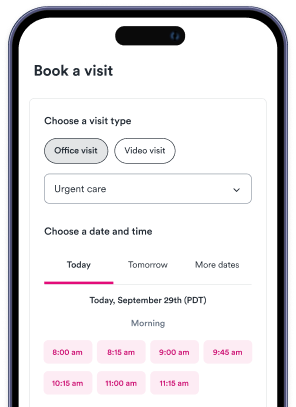
From the clinic or your couch. Find high quality, same-day urgent care for you and your kids. Book an urgent care visit today.

Yes, many urgent care clinics can prescribe Viagra (sildenafil) or its generic version after a same-day evaluation. The visit typically takes 20 to 30 minutes and includes a focused medical history, blood pressure check, medication review, and a brief screening for the underlying conditions that often drive erectile dysfunction (ED).1 Most healthy adults walk out with a prescription. People with heart disease, uncontrolled high blood pressure, or who take nitrates may need to see a primary care provider or urologist first because PDE5 inhibitors can cause a dangerous drop in blood pressure when combined with these medications.2
Viagra is the brand name for sildenafil, a phosphodiesterase-5 (PDE5) inhibitor. It works by relaxing smooth muscle in the blood vessels of the penis, increasing blood flow during sexual arousal.3 Sildenafil typically takes 30 to 60 minutes to start working and lasts about four hours. Other FDA-approved PDE5 inhibitors include tadalafil (Cialis), vardenafil (Levitra), and avanafil (Stendra) — your clinician may suggest one over another based on how long you want the effect to last and how your insurance covers them.3
Most urgent care clinics can. Sildenafil is not a controlled substance, and the American Urological Association's guidelines support PDE5 inhibitors as first-line treatment for uncomplicated erectile dysfunction.3 Clinicians at urgent care can prescribe a starting dose (commonly 50 mg sildenafil or 10 mg tadalafil), counsel you on use, and refer you elsewhere if your situation is more complex.
Expect a focused conversation rather than a full physical exam. The clinician will ask about how long you've had symptoms, any cardiovascular or diabetes history, prescription and over-the-counter medications (especially nitrates, alpha-blockers, and antifungals), recreational drug or supplement use, and mental health. They'll check your blood pressure and may order basic labs such as a fasting glucose, lipid panel, or testosterone level — or refer you to your primary care doctor for those.1
PDE5 inhibitors can interact dangerously with several medications and conditions:2
Nitrates (nitroglycerin, isosorbide) — taking sildenafil within 24 hours of nitrates can cause life-threatening low blood pressure. Riociguat, a medication for pulmonary hypertension. Significant heart disease, recent heart attack or stroke, severe liver disease, or very low or uncontrolled high blood pressure. Some alpha-blockers and antifungals require lower doses or alternate timing. Always bring a complete list of your medications to the visit.
Generic sildenafil is significantly cheaper than brand-name Viagra. Without insurance, generic sildenafil typically costs $1 to $3 per pill at most U.S. pharmacies with discount programs; brand-name Viagra can be $70 or more per pill. The urgent care visit itself usually costs $100 to $250 without insurance, and most insurance plans cover the visit as a standard urgent care copay. Telemedicine services may quote a lower bundled price for the visit plus medication.
If sildenafil doesn't work after several tries at the maximum dose, the next steps include trying a different PDE5 inhibitor, evaluating for vascular or hormonal causes, and seeing a urologist. Other prescription options include penile injections, intraurethral suppositories, and vacuum devices. Lifestyle changes — quitting smoking, treating sleep apnea, increasing aerobic exercise — also have evidence for improving function.4
Erectile dysfunction is often the first symptom of cardiovascular disease — the blood vessels in the penis are smaller and clog earlier than those in the heart. New-onset ED in men under 60 should prompt screening for diabetes, high cholesterol, and high blood pressure.1 Depression and certain medications (especially antidepressants and blood pressure drugs) are other common contributors that are worth identifying.
Go to your primary care provider or a urologist instead if you have known heart disease and haven't recently been cleared for sexual activity, ED started after a pelvic surgery or radiation, you have low libido or symptoms of low testosterone, or PDE5 inhibitors haven't worked for you before. Go to the emergency room for a prolonged erection lasting more than four hours (priapism) — this is a urological emergency.
If you'd rather not wait weeks for an appointment, search Solv for a same-day urgent care visit. Bring a list of every medication and supplement you take, and be ready to talk openly — the clinician's goal is to get you safely treated and to flag any underlying health issues worth investigating.
Most urgent care clinicians can prescribe sildenafil based on a focused history and a blood pressure check, without a full genital exam. If you have a relevant complaint (a penile injury, prostate symptoms, or pelvic pain), the clinician may include an exam. A baseline exam with your primary care provider every one to two years is still recommended.
Yes. Generic sildenafil is widely available at $1 to $3 per pill with pharmacy discount programs like GoodRx or Mark Cuban's Cost Plus Drugs. Brand-name Viagra is significantly more expensive. The urgent care visit itself typically costs $100 to $250 without insurance, and the prescription is filled separately at any pharmacy.
Sildenafil typically begins working in 30 to 60 minutes after taking it on an empty stomach. A heavy or fatty meal can delay the onset by up to two hours. The effect lasts about four hours. Sexual stimulation is still required — the medication doesn't cause an erection on its own.
Urgent care usually writes a small starter quantity (often 4 to 8 pills with no refills) so you can try the medication and follow up with a primary care provider for longer-term management. If sildenafil works well and you're otherwise healthy, your PCP can write longer prescriptions and renew them annually.
Yes — multiple telemedicine services offer ED evaluations and shipped prescriptions, often at competitive prices. Telemedicine is convenient for refills and uncomplicated cases. In-person urgent care is the better choice if you've never been evaluated for ED, have multiple chronic conditions, or want a blood pressure and medication review the same day.
Disclose every cardiovascular medication you take. Nitrates and riociguat are absolute contraindications — the combination can cause life-threatening low blood pressure. Alpha-blockers used for blood pressure or prostate symptoms may require lower PDE5 inhibitor doses and separated timing. If you have angina or have had a recent heart event, you may need cardiology clearance before starting Viagra.
From the clinic or your couch. Find high quality, same-day urgent care for you and your kids. Book an urgent care visit today.

Medically reviewed
View this article's sources and history, and read more about Solv's Content Mission Statement, editorial process, and editorial team.
Solv has strict sourcing guidelines and relies on peer-reviewed studies, academic research institutions, and medical associations. We avoid using tertiary references.
Solv’s team of medical writers and experts review and update our articles when new information becomes available.
Written by Solv Editorial Team
Medically reviewed by: Dr. Rob Rohatsch, MD
Edited by Solv Editorial Team
Edited by Solv Editorial Team
Edited by Solv Editorial Team
Edited by Solv Editorial Team
Edited by Solv Editorial Team
From the clinic or your couch. Find high quality, same-day urgent care for you and your kids. Book an urgent care visit today.